
Most DAWs assign shortcuts by mnemonic — S for solo, M for mute, and after that you're on your own. Cubase does something different, and once you see it the whole keyboard makes sense: it assigns them by where your left hand already is.
Zoom out is G. Zoom in is H. They're next to each other. Previous event is B, next event is N — next to each other. Punch in is I, punch out is O — next to each other. It isn't a naming system. It's a physical one, and it's why Cubase feels fast to people who've learned it and arbitrary to people who haven't.
Below is Cubase's default key command set, current for Cubase 15. Cross-checked key by key against the layout printed on our own Cubase keyboard. There's a free printable PDF of the whole thing too.
The short answer
Learn the number row 1–9 first — it's the toolbox, in toolbar order. Then the numeric keypad for the transport: Enter play, Num 0 stop, Num * record, Num / cycle.
Then the single letters: C metronome, Q quantize, S solo, M mute, R record enable, G/H zoom, B/N previous and next event. Those three groups cover most of a session.
Why the number row is the thing to learn first
Open Cubase and the toolbar sits along the top of the Project window: Select, Range, Split, Glue, Erase, Zoom, Mute, Draw, Play, Drumstick. Nine tools plus one.
Now press 1. Then 3. Then 1 again. Those numbers map to the toolbar left to right, in order. Not a single one is a mnemonic — 3 doesn't stand for Split — but you don't need it to be, because your fingers already know where 3 is.
This is the pattern that runs through the whole default set, and it's why the way to learn Cubase's keyboard is not to memorise a list of names. It's to learn the positions, in groups, in the order they earn their keep.
Want this as a printable PDF?
Everything on this page is free and staying free — the full list is below. But a browser tab is the wrong place for this once you're actually working, with an idea in your head and both hands on the keyboard.
So we've laid the same commands out as a printable PDF, grouped by task and sized to read at arm's length. Print it, pin it by the desk, and stop breaking flow to look things up.
Cubase Shortcuts — printable PDF
Free, A4, grouped by task. Mac and PC modifiers side by side. Checked against a real Cubase keyboard.
Pop your email in below and we'll send it straight over — it usually lands within a minute.
We'll email the PDF straight over, then the occasional production tip. Unsubscribe any time.
A note on Mac and PC
Cubase is one of the few serious DAWs that runs properly on both, and Steinberg keeps a single command set across the two. Wherever you see Ctrl/Cmd below, that's Ctrl on Windows and Command on Mac. Alt on Windows is Option on Mac.
One Windows-only exception: the Insert key drops a marker. Mac keyboards don't have one, so Mac users use the Markers window or assign their own.
What's on this page
- Why the number row is the thing to learn first
- The single-key commands
- The toolbox on the number row
- How the colour coding works
- Transport and the numeric keypad
- Locators, cycle and punch
- Markers
- Editing
- Selection and navigation
- Zoom
- Windows, panels and editors
- Workspaces
- Project and file
- Automation
- Frequently asked questions
The single-key commands
No modifier. Press the letter on its own. Learn these by position rather than alphabetically — that's how your hands will recall them.
| Action | Key |
|---|---|
| Start / stop playback | Space |
| Activate Metronome | C |
| Quantize | Q |
| Solo | S |
| Mute | M |
| Record Enable | R |
| Write automation | W |
| Snap on / off | J |
| Auto-Scroll on / off | F |
| Group Editing on selected tracks | K |
| Zoom In | H |
| Zoom Out | G |
| Locate Next Event | N |
| Locate Previous Event | B |
| Locate Selection Start | L |
| Set Locators to Selection Range | P |
| Activate Punch In | I |
| Activate Punch Out | O |
| Left Selection Side to Cursor | E |
| Right Selection Side to Cursor | D |
| Move to Front (Uncover) | U |
| Crossfade | X |
| Adjust Fades to Range | A |
| Exchange Time Formats | . |
| Open / close Editor | Return |
Look at where those sit. G and H are zoom out and in, side by side. B and N are previous and next event, side by side. I and O are punch in and punch out, side by side.
The toolbox on the number row
| Action | Key |
|---|---|
| Select (Object Selection) | 1 |
| Range | 2 |
| Split | 3 |
| Glue | 4 |
| Erase | 5 |
| Zoom | 6 |
| Mute | 7 |
| Draw | 8 |
| Play | 9 |
| Drumstick | 0 |
| Next Tool | F10 |
| Previous Tool | F9 |
Left to right along the toolbar, left to right along the number row. F9 and F10 step backwards and forwards through the same list if you'd rather cycle than jump.
How the colour coding works
This is worth a moment, because it's the thing that makes a printed layout learnable rather than just dense.
Cubase has no colour system of its own — Steinberg's Key Commands window is a plain list. So on the Editors Keys Cubase keyboard the colours do two jobs at once. The key colour tells you what family a command belongs to:
| Colour | Family |
|---|---|
| Yellow | The toolbox — the number row |
| Green | Navigation, selection and zoom |
| Blue | Editing, windows and editors |
| Orange | Recording and mixing — Solo, Mute, Write, Metronome |
| Pink | The transport, on the numeric keypad |
And the red legend is always the Shift layer. Every command printed in red at the top of a key is that key with Shift held. B is previous event, red B is previous marker. X is crossfade, red X is split range. One rule, learned once, and half the layout stops needing to be memorised at all.
Transport and the numeric keypad
Cubase puts a complete transport on the numeric keypad, which is the main reason a full-size keyboard beats a compact one for Cubase work.
| Action | Key |
|---|---|
| Start / stop | Space |
| Start | Enter |
| Stop | Num 0 |
| Record | Num * |
| Cycle on / off | Num / |
| Forward | Num + |
| Rewind | Num - |
| Fast Forward | Shift + Num + |
| Fast Rewind | Shift + Num - |
| Go to Project Start | Num . |
| Go to Left Locator | Num 1 |
| Go to Right Locator | Num 2 |
| Nudge Cursor Left | Ctrl/Cmd + Num - |
| Nudge Cursor Right | Ctrl/Cmd + Num + |
| Play Selection Range | Alt + Space |
| Retrospective MIDI Record | Shift + Num * |
| Transport panel | F2 |
Locators, cycle and punch
Select a range, press P, press Num /. Locators set, cycle on, ready to loop — three keystrokes and no mouse.
| Action | Key |
|---|---|
| Set Locators to Selection Range | P |
| Set Left Locator to Cursor | Ctrl/Cmd + Num 1 |
| Set Right Locator to Cursor | Ctrl/Cmd + Num 2 |
| Enter Left Locator | Shift + L |
| Enter Right Locator | Shift + R |
| Enter Project Cursor Position | Shift + P |
| Activate Punch In | I |
| Activate Punch Out | O |
| Enter Punch In Position | Shift + I |
| Enter Punch Out Position | Shift + O |
| Loop Selection | Alt + P |
| Enter Tempo | Shift + T |
| Enter Time Signature | Shift + C |
| Use External Synchronisation | Alt + Shift + T |
Markers
Ctrl/Cmd to set, Shift to visit. Same number both times.
| Action | Key |
|---|---|
| Insert Marker (Windows only) | Insert |
| Set Marker 1 | Ctrl/Cmd + 1 |
| Set Marker 2 | Ctrl/Cmd + 2 |
| Set Markers 3–9 | Ctrl/Cmd + 3 to 9 |
| Go to Marker 1 | Shift + 1 |
| Go to Marker 2 | Shift + 2 |
| Go to Markers 3–9 | Shift + 3 to 9 |
| Locate Next Marker | Shift + N |
| Locate Previous Marker | Shift + B |
| Recall Cycle Markers 1–9 | Shift + Num 1 to 9 |
| Open Markers window | Ctrl/Cmd + M |
Made by Editors Keys since 2005
The reference that never needs another window
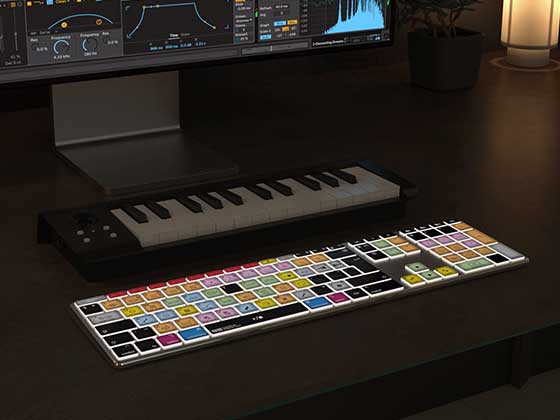
Every Cubase command printed onto the keys, colour-coded by function, with three levels of backlighting for late sessions. Wireless or wired, and — like Cubase itself — built for Mac and PC. Used by teams at the BBC, NASA, Warner Bros., Rockstar Games and Pinewood Studios.
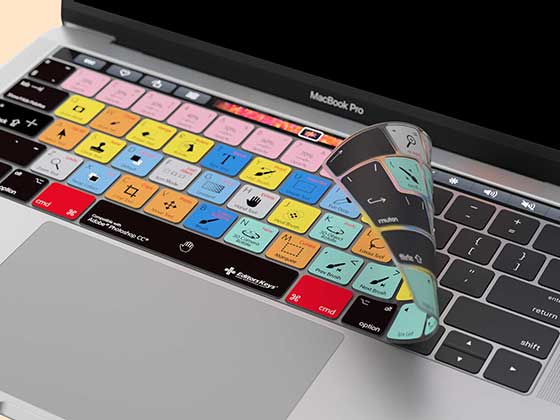
See the Cubase keyboard →On a MacBook? The silicone keyboard covers carry the same layout and protect the keys at the same time.
Editing
| Action | Key |
|---|---|
| Undo | Ctrl/Cmd + Z |
| Redo | Ctrl/Cmd + Shift + Z |
| Cut | Ctrl/Cmd + X |
| Copy | Ctrl/Cmd + C |
| Paste | Ctrl/Cmd + V |
| Paste at Origin | Alt + V |
| Paste Relative to Cursor | Shift + V |
| Cut Time | Ctrl/Cmd + Shift + X |
| Paste Time | Ctrl/Cmd + Shift + V |
| Delete Time | Shift + Backspace |
| Insert Silence | Ctrl/Cmd + Shift + E |
| Delete | Delete or Backspace |
| Duplicate | Ctrl/Cmd + D |
| Repeat | Ctrl/Cmd + K |
| Split at Cursor | Alt + X |
| Split Range | Shift + X |
| Group | Ctrl/Cmd + G |
| Ungroup | Ctrl/Cmd + U |
| Lock | Ctrl/Cmd + Shift + L |
| Unlock | Ctrl/Cmd + Shift + U |
| Mute Events | Shift + M |
| Unmute Events | Shift + U |
| Mute / Unmute Objects | Alt + M |
| Select All | Ctrl/Cmd + A |
| Select None | Ctrl/Cmd + Shift + A |
| Move to Cursor | Ctrl/Cmd + L |
| Find Track / Channel | Ctrl/Cmd + F |
| Invert | Alt + F |
| Expand / Reduce | Alt + E |
| Stationary Cursor | Alt + C |
Selection and navigation
In the Key Editor these change meaning: the arrows move the selected note by a semitone, and Shift + Up/Down moves it a full octave.
| Action | Key |
|---|---|
| Select previous / next | Left / Right Arrow |
| Select next track up / down | Up / Down Arrow |
| Extend selection left / right | Shift + Left / Right Arrow |
| Extend selection up / down | Shift + Up / Down Arrow |
| Select top track | Home |
| Select bottom track | End |
| Toggle Selection | Ctrl/Cmd + Space |
Zoom
| Action | Key |
|---|---|
| Zoom In | H |
| Zoom Out | G |
| Zoom In Vertically | Shift + H |
| Zoom Out Vertically | Shift + G |
| Zoom In Tracks | Ctrl/Cmd + Down Arrow |
| Zoom Out Tracks | Ctrl/Cmd + Up Arrow |
| Zoom Tracks Exclusive | Ctrl/Cmd + Alt + Down Arrow |
| Zoom to Selection | Alt + S |
| Zoom to Event | Shift + E |
| Zoom Full | Shift + F |
Windows, panels and editors
The function row is where Cubase keeps its windows: F3 MixConsole, F4 connections, F6 automation, F7 offline processing, F8 video, F11 instruments, F12 performance.
| Action | Key |
|---|---|
| MixConsole | F3 |
| MixConsole in Project window | Alt + F3 |
| Audio Connections | F4 |
| Automation Panel | F6 |
| Direct Offline Processing | F7 |
| Video Player | F8 |
| VST Instruments | F11 |
| Audio Performance | F12 |
| Transport panel | F2 |
| On-Screen Keyboard | Alt + K |
| Open / close Editor | Return |
| Open Score Editor | Ctrl/Cmd + R |
| Edit In-Place | Ctrl/Cmd + Shift + I |
| Show / hide Controller Lanes | Alt + L |
| Open Pool | Ctrl/Cmd + P |
| Open Markers | Ctrl/Cmd + M |
| Open Tempo Track | Ctrl/Cmd + T |
| Open Browser | Ctrl/Cmd + B |
| Project Setup | Shift + S |
| Remove Selected Tracks | Shift + Delete |
| Next panel | Tab |
| Previous panel | Shift + Tab |
Workspaces
Workspaces are saved window arrangements — one for tracking, one for editing, one for mixing. Set the screen up, press Alt + U to store it, and Alt + Num 1 to snap back to it from anywhere.
| Action | Key |
|---|---|
| Workspace 1–9 | Alt + Num 1 to 9 |
| New Workspace | Ctrl/Cmd + Num 0 |
| Update Workspace | Alt + U |
| No Workspace | Alt + Num 0 |
Project and file
| Action | Key |
|---|---|
| New | Ctrl/Cmd + N |
| Open | Ctrl/Cmd + O |
| Save | Ctrl/Cmd + S |
| Save As | Ctrl/Cmd + Shift + S |
| Save New Version | Ctrl/Cmd + Alt + S |
| Close | Ctrl/Cmd + W |
| Quit | Ctrl/Cmd + Q |
Automation
| Action | Key |
|---|---|
| Open Automation Panel | F6 |
| Read Automation, All Tracks | Alt + R |
| Write Automation, All Tracks | Alt + W |
| Write (selected) | W |
| Activate / Deactivate Focused Object | Alt + A |
Keys not doing what you expect?
Two things catch people out. First, the On-Screen Keyboard blocks nearly everything — press Alt + K to close it.
Second, a preset carried over from another machine can bring its changes with it. Open Key Commands from the Edit menu, click Defaults, and confirm Reset All.
Frequently asked questions
What are the most important Cubase keyboard shortcuts to learn first?
Three groups, in this order. The number row 1–9 for the toolbox, because you use tools constantly and the mapping is purely positional. The numeric keypad for the transport — Enter play, Num 0 stop, Num * record, Num / cycle. Then the single letters: C metronome, Q quantize, S solo, M mute, R record enable, G and H to zoom, B and N to jump between events.
Are Cubase shortcuts the same on Mac and Windows?
Almost entirely, yes. Steinberg keeps one command set across both platforms. Ctrl on Windows becomes Command on Mac, and Alt becomes Option — that's the whole conversion. The only Windows-only default worth mentioning is the Insert key for dropping a marker, since Mac keyboards don't have one.
Why have my Cubase keyboard shortcuts stopped working?
Nine times out of ten the On-Screen Keyboard is open. Cubase reserves the letter and number keys for it so you can play notes from your computer keyboard, which blocks almost every other command. Press Alt + K to close it. If that isn't it, a custom key command preset has probably been loaded — open Key Commands and click Defaults to reset.
How do I set my own keyboard shortcuts in Cubase?
Open the Key Commands dialog, find the command in the category list, click in the Type in Key field, press the combination you want, and click Assign. If it's already in use Cubase tells you what it's assigned to before you overwrite it. You can save the whole set as a preset and carry it between machines.
What is a Workspace in Cubase?
A saved arrangement of windows and zones. Set the screen up the way you want it for tracking, press Alt + U to update, then Alt + Num 1 to jump back to it instantly from anywhere in the project. Most Cubase users never set one up, and it's one of the biggest workflow wins the application offers.
Which version of Cubase do these shortcuts apply to?
Cubase 15, the current release as of 2026. Steinberg's default assignments have been remarkably stable across versions, so these hold on Cubase 14, 13 and most of 12 as well. They're shared with Nuendo too.
Can I print the Cubase shortcuts?
Yes — the free PDF on this page is built for it. A4, grouped by task, Mac and PC modifiers shown together, and laid out to be read at arm's length rather than squinted at.
Related reading
- Logic Pro keyboard shortcuts: the complete 2026 cheat sheet
- Premiere Pro keyboard shortcuts: the complete 2026 cheat sheet
- DaVinci Resolve keyboard shortcuts: the complete 2026 cheat sheet
- Avid Media Composer keyboard shortcuts: the complete 2026 cheat sheet
- The Editors Keys Cubase keyboard
Cross-checked key by key against the mapping printed on the Editors Keys Cubase keyboard. Anything the two sources disagreed on was left out. Covers the default assigned key commands only. Cubase is a trademark of Steinberg Media Technologies GmbH. Editors Keys is not affiliated with Steinberg.