
Creating great music isn't just about having the latest plugins or the most expensive studio equipment. Some of the biggest improvements you can make happen away from your instruments entirely. The way you organise your sessions, manage your projects and interact with your DAW can dramatically affect both your creativity and productivity.
Professional producers aren't necessarily working longer hours than everyone else. More often than not, they're simply working smarter. Every unnecessary mouse click, every minute spent searching for a plugin and every lost project file adds up over weeks, months and years.
Whether you're producing electronic music, recording live bands, mixing podcasts or composing film scores, these ten workflow hacks can help you spend less time fighting your software and more time making music.

1. Learn Your DAW's Keyboard Shortcuts
This is arguably the single biggest productivity improvement you can make.
Most producers rely heavily on the mouse, navigating through endless menus for commands they perform hundreds of times every day. While this might seem normal, it creates thousands of unnecessary interruptions during every session.
Think about how often you:
-
Split clips
-
Trim regions
-
Zoom in and out
-
Undo mistakes
-
Duplicate sections
-
Quantise recordings
-
Open the mixer
-
Toggle automation
-
Solo or mute tracks
-
Save projects
Each of these actions may only take an extra second or two using the mouse, but across a full day's production those seconds quickly become minutes. Across an entire year, that becomes dozens or even hundreds of hours.
Professional producers often perform nearly every common editing action without taking their hands off the keyboard.
Instead of:
-
Moving your hand to the mouse
-
Finding the correct menu
-
Selecting the command
-
Returning to the keyboard
you simply press a key combination instantly.
This keeps your creative momentum flowing.

Start by learning your most-used shortcuts
Don't try memorising every shortcut overnight.
Instead, choose 10-15 shortcuts you use constantly, such as:
-
Cut
-
Copy
-
Paste
-
Undo
-
Redo
-
Save
-
Duplicate
-
Split
-
Zoom
-
Loop playback
Once those become second nature, add another handful.
Within a few weeks you'll notice yourself working dramatically faster.
2. Create Custom Project Templates
One of the biggest productivity killers is starting every session from scratch.
Every time you open your DAW, do you find yourself:
-
Creating audio tracks
-
Adding MIDI tracks
-
Loading favourite instruments
-
Routing buses
-
Creating effect sends
-
Naming tracks
-
Colour coding channels
-
Setting recording inputs
If so, you're repeating work you've already done hundreds of times.
Professional producers almost always use templates.
A recording template might already include:
-
Drum tracks
-
Guitar inputs
-
Vocal channels
-
Headphone sends
-
Master bus processing
-
Talkback routing
An electronic production template might contain:
-
Favourite synths
-
Drum machines
-
Bass instruments
-
Sidechain routing
-
Reverb buses
-
Delay sends
-
Mastering chain
Opening a project that already contains everything you normally use means inspiration never has to wait.
3. Organise Your Sample Library Properly
Nothing interrupts creativity faster than spending fifteen minutes looking for one snare drum.
Many producers accumulate thousands of samples over the years.
Eventually their folders become something like:
Samples
Samples New
New Samples
Downloads
Downloads 2
Kick Pack Final
Kick Pack Final FINAL
Random
Misc
Instead, build a logical folder structure.
For example:
Drums
    Kicks
    Snares
    Hi Hats
    Cymbals
    Percussion

Bass

Synths

Vocals

FX

Transitions

Textures

Field Recordings
You can go even further by creating folders for:
-
Vintage
-
Lo-fi
-
Electronic
-
Acoustic
-
Aggressive
-
Ambient
-
Organic
When every sound has a home, you'll spend far less time searching and far more time producing.
4. Colour Code Everything
Our brains process colours much faster than text.
Large sessions with 80 or more tracks quickly become overwhelming if everything looks identical.
Professional engineers colour-code almost everything.
For example:
-
Red = Drums
-
Blue = Bass
-
Green = Guitars
-
Purple = Synths
-
Yellow = Vocals
-
Orange = FX
-
Grey = Reference tracks

Now, instead of reading every channel name, your eyes instantly know where everything is.
Many producers also colour-code:
-
Buses
-
Folder tracks
-
Automation lanes
-
Markers
-
Arrangement sections
The larger your projects become, the more valuable this simple habit becomes.
5. Use Track Presets and Channel Strips
If every vocal always starts with:
-
EQ
-
Compressor
-
De-esser
-
Saturation
-
Reverb send
why rebuild that chain every single session?
Most DAWs allow you to save channel strips or track presets.

Likewise for:
-
Acoustic guitars
-
Electric guitars
-
Drum buses
-
Bass processing
-
Podcast voices
-
Piano recordings
Remember, presets aren't about finishing the mix instantly.
They're about creating an excellent starting point that gets you closer to your finished sound in seconds.
6. Back Up Every Project Automatically
Every producer eventually hears a horror story, sometimes it's their own.
Hard drives fail, computers get stolen, operating systems crash, power cuts happen and accidental deletion is surprisingly common!
The solution is following the professional 3-2-1 backup rule.
Keep:
-
Three copies of your data
-
On two different storage devices
-
With one copy stored off-site or in the cloud
For example:
Original project:
-
Computer SSD
Backup:
-
External SSD
Off-site:
-
Cloud backup service
Automatic backups mean you never have to remember to save copies manually.
Many DAWs also create automatic project backups, which can rescue sessions after crashes.
Considering some projects represent weeks or months of work, backups are easily one of the highest-value habits any producer can develop.
7. Keep Your Plugin Collection Under Control
More plugins rarely lead to better productions.
In fact, the opposite is often true.
Many producers own hundreds of plugins but regularly use fewer than twenty.
Constantly auditioning different compressors, reverbs or equalisers creates decision fatigue.
Instead:
Choose a small collection of trusted tools.
Learn them thoroughly.
Understand exactly:
-
when to use them
-
why they sound different
-
their strengths
-
their weaknesses
You'll make decisions faster and your mixes will become more consistent.
Professionals often become incredibly efficient because they know their favourite tools inside and out.
8. Separate Writing, Recording and Mixing Into Different Sessions
Trying to compose, arrange, record, edit and mix simultaneously often leads to creative paralysis.
Your brain constantly switches between creative and analytical thinking.
Instead, dedicate different sessions to different tasks.
For example:
Writing Session
Focus only on:
-
Melody
-
Harmony
-
Chords
-
Song structure
Ignore mixing.
Recording Session
Focus on:
-
Performance
-
Timing
-
Expression
-
Clean takes
Ignore EQ.

Editing Session
Focus on:
-
Comping
-
Quantising
-
Noise removal
-
Tightening performances
Mixing Session
Only after everything is recorded.
Now your entire attention can be devoted to:
-
Balance
-
Compression
-
EQ
-
Automation
-
Effects
This separation dramatically reduces decision fatigue while improving overall quality.
9. Use Markers, Notes and Session Organisation
Large productions can quickly become confusing.
Professional producers constantly leave themselves reminders.
Examples include:
-
Chorus starts
-
Vocal retake needed
-
Guitar punch-in
-
Automate delay here
-
Check phase
-
Replace kick
-
Final chorus louder

Most DAWs include:
-
Timeline markers
-
Comments
-
Notes
-
Memory locations
These become invaluable when returning to projects weeks later.
Similarly, keep every project folder organised.
Include:
-
Audio files
-
Project files
-
Mix exports
-
Master exports
-
Artwork
-
Session notes
-
Reference tracks
Future you will be incredibly grateful.
10. Protect Your Creative Flow by Removing Distractions
Workflow isn't only about software.
It's about maintaining momentum.
Every interruption breaks concentration.
Consider:
-
Turning off phone notifications
-
Closing web browsers
-
Disabling unnecessary background applications
-
Using full-screen mode
-
Keeping water nearby
-
Scheduling breaks every hour
-
Working in focused blocks rather than endlessly
Many producers find they complete more work in three focused hours than during an unfocused eight-hour day.
When inspiration arrives, the fewer interruptions between your ideas and your DAW, the better.
Bonus Tip: Use Editors Keys Shortcut Keyboards and Keyboard Covers
One of the easiest ways to speed up your workflow is making your keyboard work for you.
Many producers know keyboard shortcuts are faster than using menus, but remembering dozens—or even hundreds—of shortcut combinations can feel overwhelming, especially when learning a new DAW.
That's where Editors Keys shortcut keyboards and keyboard covers can make a real difference.
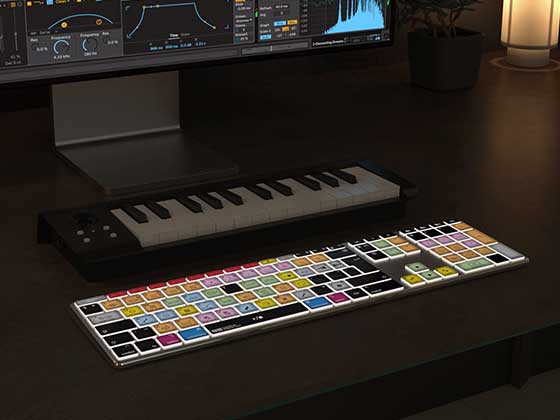
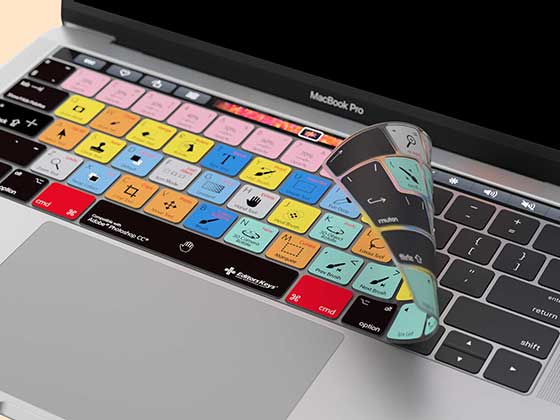
Instead of constantly searching through menus or trying to memorise every command, the most commonly used shortcuts are clearly printed directly onto the keys. This provides a visual reference while you work, helping you discover new shortcuts naturally and build muscle memory much faster.
Whether you're producing in:
-
Logic Pro
-
Ableton Live
-
Cubase
-
Pro Tools
-
FL Studio
-
Adobe Audition
-
Reaper
-
Studio One
and many other creative applications, Editors Keys produces dedicated shortcut keyboards and keyboard covers designed specifically for your software.

The benefits include:
-
Faster editing with fewer mouse movements
-
Reduced time searching through menus
-
Easier learning for beginners
-
Improved shortcut memorisation through daily use
-
Greater confidence navigating complex DAWs
-
Increased productivity during recording, editing and mixing
Over time, many producers find they instinctively remember shortcuts without even looking at the keyboard, making their entire workflow significantly more efficient.
Whether you're just beginning your production journey or you're already working professionally, investing in your workflow can often deliver greater long-term benefits than buying yet another plugin.
Final Thoughts
Improving your workflow isn't about rushing through music production. It's about removing unnecessary obstacles so your ideas can flow more naturally from your imagination into your speakers.
Small improvements—learning keyboard shortcuts, organising samples, creating templates, backing up projects and reducing distractions—might seem minor on their own. Together, however, they can save countless hours over the course of a year while making every production session more enjoyable and productive.
The most successful producers aren't simply the ones with the biggest studios or the most expensive equipment. They're the ones who build efficient systems that allow creativity to take centre stage.
Take the time to implement even a handful of these workflow hacks, and you'll spend less time navigating menus, searching for files or fixing preventable problems—and far more time doing what matters most: creating great music.