
Choosing the best camera for YouTube in 2026 is no longer simply a question of buying the camera with the largest sensor or the highest resolution. Modern content creators have an enormous range of options, from pocket-sized gimbal cameras and 360-degree cameras to interchangeable-lens mirrorless systems and dedicated compact cameras designed specifically for vlogging. The best YouTube camera is ultimately the one that fits the way you actually create content.

For a travel vlogger, portability and stabilisation may be more important than interchangeable lenses. A filmmaker making cinematic YouTube documentaries may prioritise a large sensor, 10-bit recording and Log profiles. Someone making talking-head videos from a home studio might care more about autofocus, audio connectivity, a flip-out screen and low-light performance. Meanwhile, creators producing YouTube Shorts and social media videos may benefit enormously from a camera that can shoot vertically without complicated reframing.
The good news is that cameras have become remarkably capable in 2026. You can now buy relatively small cameras capable of recording extremely high-quality 4K footage, advanced colour profiles, slow motion, intelligent subject tracking and sophisticated stabilisation. Some cameras can even give you considerable freedom to decide what the shot should look like after you have finished recording.
In this guide, we’re looking at five of the best cameras for YouTube creators and vloggers in 2026, comparing what makes each one useful, where each camera excels and which type of content creator should consider buying it.
Of course — here’s a shorter version that keeps the important selling points and matches the length/style of the other entries in the article.

1. DJI Osmo Pocket 4P – Best Overall Camera for YouTube Creators
If you want one camera that combines portability, professional-quality video, stabilisation and versatility, the DJI Osmo Pocket 4P is one of the strongest choices for YouTube creators in 2026. Its compact design makes it easy to carry anywhere, while a 1-inch CMOS main sensor, three-axis mechanical gimbal, 4K recording and 10-bit D-Log 2 give it the capabilities needed for high-quality content creation.
One of the Pocket 4P's biggest advantages is its dual-camera system. The main camera features a 20mm-equivalent f/2.0 lens, making it ideal for vlogging, talking-head videos and wide environmental shots, while a dedicated 60mm-equivalent f/1.8 telephoto camera provides a much tighter perspective for portraits, product shots and cinematic B-roll. This gives creators two genuinely different focal lengths without needing to carry additional lenses.
The built-in three-axis gimbal is another major advantage for vloggers. It keeps footage remarkably smooth while walking or moving, without requiring a separate electronic gimbal. Combined with ActiveTrack 8.0, the Pocket 4P is particularly useful for solo creators who need the camera to follow and keep them in frame while filming themselves.

4K, 10-bit D-Log 2 and low-light performance
The Pocket 4P is much more than a convenient vlogging camera. Its 1-inch main sensor uses LOFIC technology and can provide up to 17 stops of dynamic range when shooting in D-Log 2, giving creators more flexibility when dealing with bright skies, shadows and difficult lighting. The 10-bit Log footage can also be colour graded in software such as DaVinci Resolve, Premiere Pro and Final Cut Pro, making it suitable for creators who want a more cinematic look.
Low-light performance is another strength for a camera of this size. The 1-inch main sensor and f/2.0 lens can produce good results in indoor and evening environments, while the 60mm camera's f/1.8 aperture is useful for portraits and close-up shots where you want additional background blur.
The main camera can also record 4K at up to 240fps, while the 60mm camera supports 4K at up to 200fps. This allows creators to capture smooth slow-motion footage for travel videos, product content, action sequences and more.
Why YouTubers should consider the Pocket 4P
The biggest argument for the Pocket 4P is how much functionality it provides in such a small package. It can serve as a primary vlogging camera, travel camera, B-roll camera or compact secondary camera for a larger production. Its 103GB of built-in storage, fast data transfer and compatibility with DJI's OsmoAudio ecosystem also help simplify the process of recording and transferring content.
Best for: Travel vloggers, daily vloggers, solo creators, product reviewers, walking videos and creators who prioritise portability.
Main advantage: Excellent combination of image quality, dual focal lengths, gimbal stabilisation and professional video features.
Main limitation: It doesn't offer the interchangeable lenses or larger sensors available on mirrorless cameras such as the Sony ZV-E10 II and Panasonic Lumix S9.
DJI Osmo Pocket 4P verdict
Our overall winner for most YouTube creators in 2026. The Pocket 4P combines the convenience of a pocket-sized camera with features such as 4K high-frame-rate recording, 10-bit D-Log 2, 17-stop dynamic range, mechanical gimbal stabilisation and two useful focal lengths. For creators who want one small camera capable of handling vlogging, travel, cinematic B-roll and social media content, it is an exceptionally versatile choice.

2. Sony ZV-E10 II – Best Interchangeable-Lens Camera for YouTubers
If the DJI Osmo Pocket 4 is about convenience, the Sony ZV-E10 II is about flexibility. It is one of the strongest choices for creators who want to start with a relatively compact camera but don't want to be locked into a fixed lens.
The ZV-E10 II uses an APS-C sensor and Sony's E-mount, giving creators access to a huge range of interchangeable lenses. You can start with a compact wide-angle lens for vlogging and later add a fast prime lens for talking-head videos, a telephoto lens for outdoor filming or a wide zoom for travel.
For YouTube creators, this is a significant advantage because your camera can grow alongside your channel. Someone starting with straightforward vlogs may eventually want to make interviews, documentaries, product videos or cinematic B-roll. An interchangeable-lens system gives you considerably more options than a fixed-lens compact.
The ZV-E10 II is also a serious video camera underneath its creator-friendly design. Sony supports 4K recording at up to 60p with 10-bit 4:2:2, including All-Intra recording options, giving creators considerable flexibility when grading and editing footage. It also supports S-Log3 for wide dynamic range and allows user LUTs to be imported into the camera.
Excellent autofocus for solo creators
Autofocus is particularly important when you're filming yourself because there may be nobody behind the camera to adjust focus. The ZV-E10 II uses Sony's Fast Hybrid AF system, with phase-detection and contrast-detection autofocus. Sony lists up to 495 phase-detection autofocus points for movies, as well as subject recognition for humans, animals and birds.
This makes it particularly useful for creators who regularly move around in front of the camera. Whether you're reviewing a product, demonstrating something, cooking, filming a tutorial or walking through a location, reliable autofocus can save you from discovering after the shoot that your footage is out of focus.
The vari-angle screen is another important feature. It allows you to see yourself while recording and makes the camera suitable for horizontal YouTube videos as well as vertical content for Shorts, Instagram and TikTok.
10-bit recording and colour grading
For creators who want to develop a more cinematic visual style, the ZV-E10 II offers much more than basic vlogging features.
10-bit 4:2:2 recording gives colourists significantly more information to work with than conventional 8-bit footage. Combined with S-Log3, this means you can expose and grade your footage more deliberately, balancing highlights, shadows, skin tones and overall colour without the image falling apart as quickly.
This is particularly useful if you intend to edit in Premiere Pro, DaVinci Resolve or Final Cut Pro and want to create a consistent visual identity across your channel. Sony also supports importing LUTs, allowing you to preview or apply a desired look directly in the camera.
Audio is another area where the ZV-E10 II makes sense for serious creators. The camera supports digital audio through its Multi Interface Shoe, allowing compatible microphones to connect directly to the camera while maintaining a streamlined setup.
Sony ZV-E10 II verdict
Best for creators who want to build a more serious camera system. If you're willing to carry interchangeable lenses and learn more about exposure, lenses and colour grading, the ZV-E10 II has much greater room to grow than a pocket camera.
Best for: Established YouTubers, filmmakers, product reviewers, talking-head creators, documentary makers and anyone wanting interchangeable lenses.
Main advantage: Excellent combination of APS-C image quality, autofocus, 4K/60p 10-bit recording and lens flexibility.
Main limitation: You need to buy and carry lenses, making it less convenient than the Pocket 4.

3. Canon PowerShot V1 – Best Compact YouTube Camera
Canon's PowerShot V1 takes a different approach to the interchangeable-lens cameras above. Rather than asking creators to choose lenses, Canon has designed a compact fixed-lens camera specifically around video and content creation.
The V1 features a relatively large 1.4-inch sensor, a built-in 16-50mm-equivalent f/2.8 lens, optical image stabilisation and 4K recording. It can also record 4K at 60p and Full HD at 120p for slow-motion footage. Canon says the camera supports unlimited 4K recording, with active cooling helping it remain suitable for longer recording sessions.
For many YouTubers, this simplicity is a major advantage. There is no need to decide which lens to take with you, and you don't need to worry about changing lenses while travelling. The 16-50mm range is versatile enough for wide-angle vlogging as well as tighter shots and product footage.
The f/2.8 maximum aperture is also useful when shooting indoors or in less-than-perfect lighting. Although it cannot compete with a large full-frame sensor and a very fast prime lens for extreme low-light shooting, the 1.4-inch sensor gives it an advantage over many smaller compact and action cameras.

Built for talking to camera
The PowerShot V1 is clearly designed around the realities of modern content creation. It has a vari-angle touchscreen, a front-facing recording button and subject-recognition autofocus capable of detecting people and animals. Canon also includes built-in microphone functionality, a headphone connection for monitoring and the ability to connect external microphones.
This makes it particularly attractive for solo creators. You can set up the camera, flip the screen towards yourself and start recording without needing a complicated rig.
The camera also supports Wi-Fi and USB connectivity, while UVC/UAC functionality allows it to operate as a plug-and-play camera for compatible live-streaming setups. This could make the V1 particularly useful for YouTubers who regularly livestream as well as upload edited videos.
Canon Log 3 and built-in ND filter
Perhaps surprisingly for such a compact camera, the V1 also offers features aimed at more advanced video production.
Canon Log 3 provides greater flexibility when colour grading, while the built-in ND filter is particularly useful for creators who want to maintain a cinematic shutter speed when filming outdoors in bright conditions.
That ND filter is something beginners may initially overlook, but it can make a substantial difference to outdoor video. If you want to maintain a natural-looking motion blur while shooting at a wide aperture in bright sunlight, reducing the amount of light entering the lens is essential. Having an ND filter built into the camera means you don't necessarily need to carry and install a separate filter.
Canon PowerShot V1 verdict
The PowerShot V1 is an excellent middle ground between a smartphone-style vlogging camera and a full interchangeable-lens system. It offers serious video specifications without requiring the creator to build a complicated camera kit.
Best for: YouTubers, vloggers, livestreamers, product reviewers and creators who want excellent video quality without interchangeable lenses.
Main advantage: A very well-balanced combination of compact design, large sensor, versatile built-in lens, stabilisation and creator-focused features.
Main limitation: The fixed lens means you don't have the upgrade path offered by the Sony ZV-E10 II or Panasonic S9.

4. Insta360 X6 – Best for Creative YouTube Videos and 360-Degree Content
The Insta360 X6 is perhaps the most unusual camera on this list, and that's precisely why YouTubers should consider it.
Instead of simply pointing the camera at your subject, the X6 captures a 360-degree view around the camera. That changes the way you think about filming because you don't necessarily have to decide exactly where the camera should be pointing while recording.
The X6 can record 8K 360-degree video, while also offering 5K/60fps and ultra-wide 170-degree video modes. Insta360's current specifications also list advanced AI processing and features designed to make 360-degree footage easier to turn into conventional videos.
For a YouTuber, this can be incredibly useful.
Imagine walking through a city while holding the X6 on an invisible selfie stick. Instead of choosing whether to point the camera at yourself or the buildings around you, you can capture everything and decide later which direction the final video should face.
This is one of the biggest differences between a conventional camera and a 360-degree camera. With a traditional camera, framing happens when you record. With a 360-degree camera, much of the framing can happen during editing.

Reframing gives creators more freedom
The X6 is particularly powerful for travel vloggers, cycling channels, adventure creators and action content. You can record a complete environment and then reframe the footage afterwards into a conventional 16:9 YouTube video or vertical content for Shorts and social media.
Insta360's current X-series specifications list 8K 360 video at up to 50fps on the X6, as well as 4K recording at up to 100fps in 360 mode.
This also means one recording can potentially produce multiple pieces of content. A creator might record a long-form YouTube video and then reframe the same footage into several vertical clips without needing to reshoot every angle.
The X6 also has a range of AI-assisted and automatic editing features designed to simplify the process of finding useful moments within 360-degree footage. That is particularly valuable because 360 video can initially feel more complicated than conventional footage.
What about low light?
Low-light performance is one area where creators need to think carefully about camera choice. 360 cameras have traditionally had smaller sensors than larger mirrorless cameras, and although the X6 has made significant progress, a full-frame camera such as the Lumix S9 will still have an inherent advantage when shooting very dark scenes.
However, the X6's versatility can outweigh that limitation for the right creator. If you are filming outdoors during the day, travelling, cycling, skiing, hiking or creating energetic action content, the ability to capture an entire environment can be far more valuable than having the cleanest possible night-time image.
Insta360 X6 verdict
Best for creators who want to do something different. If your YouTube channel relies on travel, adventure, action, immersive footage or unusual camera angles, the X6 can produce shots that would be difficult or impossible to recreate with a conventional camera.
Best for: Travel vloggers, adventure channels, cycling channels, action creators, YouTube Shorts and creators who want highly flexible reframing.
Main advantage: 360-degree 8K capture provides extraordinary freedom when choosing the final composition.
Main limitation: It requires a different editing workflow, and it isn't the strongest choice for traditional cinematic low-light footage.

5. Panasonic Lumix S9 – Best for Cinematic YouTube Content and Colour Grading
At the other end of the spectrum from the Insta360 X6 is the Panasonic Lumix S9. This is the camera on our list for creators who are particularly interested in image quality, cinematic footage and colour grading.
The S9 features a 24.2-megapixel full-frame sensor, L-Mount interchangeable lenses and professional video features including 6K recording, 4K recording, V-Log and 10-bit video modes. Panasonic specifies more than 14 stops of latitude when shooting V-Log, making the camera particularly interesting for creators who want to capture footage with significant post-production flexibility.
The larger full-frame sensor can also be a major advantage when shooting in low light. A larger sensor isn't automatically a guarantee of better low-light footage, because lens aperture, exposure settings, noise reduction and processing all matter, but full-frame cameras can provide excellent results when paired with suitable fast lenses.
This makes the S9 an attractive choice for cinematic YouTube channels, documentary creators, filmmakers and creators who want their videos to have a more polished visual identity.

V-Log and REAL TIME LUT
One of the S9's most interesting features for content creators is Panasonic's REAL TIME LUT system.
The camera can apply LUTs directly while recording, allowing creators to establish a distinctive visual style without necessarily having to perform extensive colour grading afterwards. Panasonic also allows LUT files to be loaded into the camera, while the LUMIX Lab app can be used to create and manage looks.
For a professional editor, however, V-Log remains extremely useful. Shooting Log allows you to retain substantial highlight and shadow information and then perform the creative grading later in software such as DaVinci Resolve or Premiere Pro.
The S9 also supports 6K recording and high-quality 4K formats, including 10-bit options. Panasonic lists 4K 4:2:2 10-bit recording among its supported modes, while V-Log provides a wide dynamic range for professional post-production.
A surprisingly creator-friendly camera
Despite its more professional capabilities, the S9 is relatively compact. Panasonic lists the body at approximately 403g, with the complete camera weight depending on the battery, card and lens. It has a free-angle monitor, Wi-Fi, Bluetooth and USB power support, making it considerably more practical for content creation than a traditional large cinema camera.
The LUMIX Lab app is another important part of the workflow. Panasonic has designed it around the idea of getting content from camera to smartphone quickly, with tools for transferring footage, cropping it and applying LUTs.
For a creator who wants the visual quality of a proper full-frame camera while still being able to publish quickly, this combination is compelling.
Panasonic Lumix S9 verdict
Best for serious creators who care about cinematic image quality and colour grading. If you're already comfortable with manual exposure and editing, the S9 provides considerably more creative control than the simpler cameras on this list.
Best for: Filmmakers, cinematic YouTubers, documentary creators, travel filmmakers and advanced videographers.
Main advantage: Full-frame image quality, V-Log, 10-bit recording, 6K video and extensive colour-control options.
Main limitation: It is more expensive and complicated to use than the Pocket 4 or PowerShot V1, and you need to account for the cost and size of lenses.
DJI Osmo Pocket 4 vs Sony ZV-E10 II vs Canon V1 vs Insta360 X6 vs Lumix S9
So, which of these five cameras is actually the best?
The answer depends heavily on what you intend to film.
If you are primarily a vlogger, the DJI Osmo Pocket 4 is probably the easiest recommendation. Its built-in gimbal, compact body, tracking, 1-inch sensor and 4K/240fps capability give you an enormous amount of functionality without requiring a bag full of accessories.
If you want to build a professional camera system, the Sony ZV-E10 II is arguably the better long-term investment. Its interchangeable lenses and 10-bit 4K recording mean that you can begin with a simple setup and gradually expand as your channel grows.
The Canon PowerShot V1 is perhaps the most straightforward conventional vlogging camera here. It gives you a fixed zoom lens, large sensor, optical stabilisation, 4K/60p, Canon Log 3, a built-in ND filter and a creator-focused interface. It is particularly appealing if you want good quality without spending time thinking about lenses.
The Insta360 X6 is the obvious choice for creators who want something completely different. Its 360-degree capture makes it uniquely suited to travel, adventure and action content, while the ability to reframe footage later makes it incredibly versatile for producing both YouTube videos and vertical social content.
Finally, the Lumix S9 is the camera for creators who want the most cinematic approach. Its full-frame sensor, V-Log, 10-bit recording and extensive colour tools make it much closer to a professional filmmaking system than a simple vlogging camera.
| Camera | Best for | Video strengths | Stabilisation | Colour options | Low-light potential | Portability |
|---|---|---|---|---|---|---|
| DJI Osmo Pocket 4 | Vlogging & travel | 4K/240fps, 10-bit D-Log | Excellent 3-axis gimbal | D-Log | Very good for its size | Excellent |
| Sony ZV-E10 II | Serious YouTube production | 4K/60p, 10-bit 4:2:2 | Lens-dependent / electronic | S-Log3, LUTs | Very good | Very good |
| Canon PowerShot V1 | Easy vlogging | 4K/60p, FHD/120p | Optical + digital | Canon Log 3 | Very good for compact camera | Excellent |
| Insta360 X6 | 360/action/travel | 8K 360, 5K/60 | Advanced electronic stabilisation | Multiple creative modes | Good | Excellent |
| Panasonic Lumix S9 | Cinematic video | 6K, 4K 10-bit | Active I.S. | V-Log, REAL TIME LUT | Excellent | Good |
Which Camera Has the Best 4K Video?
All five cameras can produce highly detailed footage, but the way they achieve that differs considerably.
The DJI Osmo Pocket 4 is particularly impressive because it combines 4K/240fps, a 1-inch sensor and 10-bit D-Log with a tiny body and mechanical gimbal.
The Sony ZV-E10 II is stronger for conventional filmmaking because its interchangeable lenses and 10-bit 4K recording provide more control over the final image. Sony supports 4K/60p as well as 4:2:2 10-bit recording, making it an excellent choice for creators who intend to colour grade their footage.
Canon's PowerShot V1 provides a particularly convenient 4K solution, with 4K/60p recording, a versatile 16-50mm lens and optical image stabilisation.
The Insta360 X6 goes beyond conventional 4K by capturing 8K 360-degree footage, although creators should remember that reframing a 360-degree image into a conventional 16:9 frame means the final result does not use the entire 8K image in the same way a conventional 8K camera would.
The Panasonic S9, meanwhile, is the strongest option here for creators who want to capture a high-quality image specifically for later post-production, with 6K recording, 10-bit options and V-Log.
Which Camera Is Best for Low-Light YouTube Videos?
Low-light performance is an important consideration for creators who film indoors, at night, in restaurants, at concerts or while travelling after dark.
Sensor size is one of the biggest factors. Generally speaking, a larger sensor can provide better noise performance and greater flexibility in low light, particularly when paired with a fast lens. This is where the Panasonic S9 has a natural advantage with its full-frame sensor.
The Sony ZV-E10 II also performs well thanks to its APS-C sensor, while the Canon PowerShot V1's 1.4-inch sensor is unusually large for a fixed-lens compact camera. The DJI Pocket 4's 1-inch sensor is smaller again, but DJI has specifically improved low-light imaging compared with its predecessor, making it a surprisingly capable pocket camera for evening content.
For the cleanest cinematic low-light image, the Lumix S9 is the strongest choice from this list. For the best balance between low-light performance and portability, however, the Pocket 4 is arguably more attractive.
Do You Actually Need 4K for YouTube?
Although 4K has become a standard feature of modern cameras, it's worth remembering that YouTube does not automatically require you to shoot everything in 4K.
Shooting in 4K can be extremely useful because it gives you additional resolution for cropping, reframing and stabilising footage. For example, you can record a person in a 4K wide shot and crop into the image during editing to create a tighter shot while still retaining a high-quality 1080p or 4K output.
4K also gives your videos a certain degree of future-proofing. As displays continue to improve, keeping your original footage at a higher resolution can be useful if you eventually want to repurpose older videos.
However, don't choose a camera purely because it has the largest resolution number. A well-exposed, well-composed 4K image with good lighting and excellent audio will generally be far more valuable to a YouTube creator than poorly exposed 8K footage.
Don't Forget About Audio
One of the biggest mistakes new YouTubers make is spending their entire budget on a camera and forgetting about audio.
Viewers will generally tolerate a video that isn't absolutely razor-sharp, but poor audio can make even excellent footage difficult to watch. Wind noise, echo, background noise and inconsistent recording levels can immediately make a video feel amateur.
This is why microphone compatibility, headphone monitoring and wireless microphone support should be considered when choosing a camera. The Canon PowerShot V1, Sony ZV-E10 II and DJI Osmo Pocket 4 all offer particularly useful options for creators who want to build a more sophisticated audio workflow.
Good lighting is equally important. A relatively affordable camera with a good lens, sensible exposure and decent lighting can produce much more impressive footage than a substantially more expensive camera being used in a dark room with poor exposure.
The Camera Is Only Half of the YouTube Workflow
Buying a great camera is only the beginning. Once you have recorded your footage, you still need to transfer it, organise it, edit it, colour grade it, add music and sound effects, correct your audio, create graphics and export the finished video.
This is where your editing setup can make a surprisingly large difference.
Whether you're working in Final Cut Pro, Adobe Premiere Pro, DaVinci Resolve, Logic Pro, Cubase, Pro Tools or another creative application, repeatedly reaching for menus and searching for keyboard shortcuts can interrupt your creative flow.
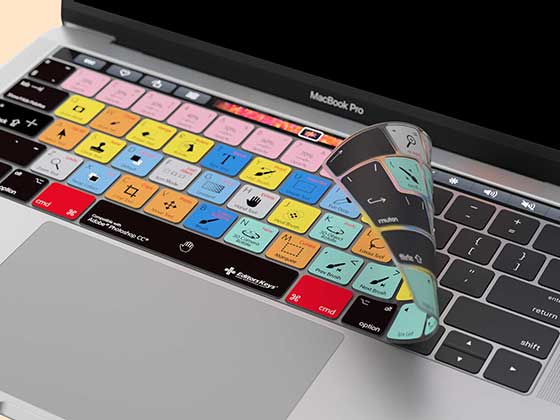
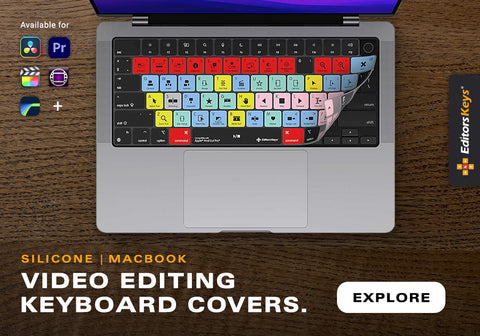
Editors Keys shortcut keyboards and silicone keyboard covers are designed to solve exactly this problem. Instead of trying to memorise where every editing command is located, the shortcuts for your software are clearly mapped directly onto the keys, allowing you to identify commands quickly and build muscle memory as you edit.
For a YouTuber producing videos every week, this can make a significant difference. Once you become familiar with the layout, common operations such as cutting clips, navigating the timeline, playing and pausing footage, trimming, zooming and accessing frequently used tools can become much faster and more intuitive.
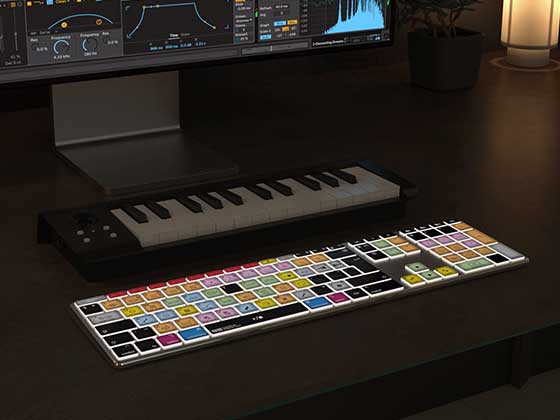
Editors Keys AB10 Air Wireless Backlit Keyboard
The Editors Keys AB10 Air wireless backlit shortcut editing keyboard is particularly useful for creators who want a clean, flexible editing setup without being permanently tethered to a computer by a cable. Its backlighting makes the shortcut labels easier to see in darker editing environments, while the wireless design helps keep your desk uncluttered.
For creators who edit YouTube videos late at night or work in a dedicated studio, having the shortcuts clearly printed on the keys means you can spend less time searching through menus and more time concentrating on the actual edit.
Editors Keys AB10 Core Wired USB-C Backlit Keyboard
If you prefer a wired setup, the Editors Keys AB10 Core wired USB-C backlit shortcut editing keyboard provides the same fundamental concept in a straightforward USB-C design. It is an excellent choice for creators who want a reliable connection and a dedicated keyboard for video or audio editing.
The major benefit of an Editors Keys shortcut keyboard isn't simply that the shortcuts are printed on the keys. Over time, seeing the commands repeatedly helps you memorise them naturally. Instead of constantly asking yourself which key combination performs a particular action, your hands begin to learn the workflow.
You can also explore the wider range of Editors Keys shortcut keyboards and silicone keyboard covers to find an editing setup suited to your preferred software and workflow.
So, What Is the Best YouTube Camera in 2026?
If we had to choose just one camera for the broadest range of YouTube creators in 2026, the DJI Osmo Pocket 4 would be our overall winner.
The reason isn't that it has the largest sensor, the highest theoretical image quality or the most interchangeable lenses. It wins because it combines so many of the things YouTubers actually need into one incredibly compact camera.
The 1-inch sensor, 4K/240fps recording, 10-bit D-Log, 14-stop dynamic range, three-axis mechanical stabilisation, intelligent tracking, rotating screen and compact design make it remarkably versatile.
For a creator who travels, walks, films themselves, records behind-the-scenes footage or simply wants to avoid carrying a large camera system, it is exceptionally difficult to beat.
However, the Sony ZV-E10 II is arguably the better choice for a creator who wants to build a long-term professional camera system, while the Panasonic Lumix S9 is the stronger option for cinematic production and serious colour grading. The Canon PowerShot V1 is an excellent choice for creators who want a simple, high-quality fixed-lens camera, and the Insta360 X6 is the standout option for anyone who wants to create immersive 360-degree and highly dynamic content.
Ultimately, the best camera for YouTube is the one that matches the way you create. A travel vlogger doesn't necessarily need the same equipment as a filmmaker, and a creator making daily talking-head videos has very different requirements from someone producing adventure films.
The most important thing is to choose a camera that you will actually take with you and use. A compact camera sitting in your bag and producing great footage every week can be far more valuable than a technically superior camera that is too large or complicated to carry.
Once you've found that camera, pair it with good audio, sensible lighting and an efficient editing workflow. With the right combination of equipment and software, you can turn the footage you capture into polished, professional-looking YouTube content without making the production process unnecessarily complicated.
And when it comes to the editing stage, an Editors Keys shortcut keyboard or silicone keyboard cover can help you work faster by putting the commands you use every day directly in front of you. For creators producing content regularly, saving a few seconds on individual editing actions can quickly add up to hours saved across an entire year.