

Choosing the right monitor for colour grading can have a huge impact on the quality and consistency of your finished video. When you are adjusting skin tones, balancing shadows, recovering highlights or matching shots from different cameras, you need to know that the colours you are seeing on screen are as close as possible to the actual image data. A monitor that is overly warm, too cool, too saturated or inconsistent across the panel can lead to grading decisions that look correct on your workstation but completely different when the footage is viewed elsewhere.
For professional colour grading, resolution is only part of the equation. A good grading monitor should offer a wide and accurately calibrated colour gamut, excellent panel uniformity, reliable black levels, suitable brightness and support for the colour spaces and gamma curves used in modern video production. Hardware calibration is particularly valuable because it allows the monitor itself to be calibrated rather than relying entirely on the computer's graphics output.
With that in mind, here are five of the best monitors to consider for colour grading in 2026, ranging from extremely high-end professional reference displays to more accessible options that still provide excellent colour accuracy.

1. EIZO ColorEdge CG3100X – Best Professional Colour-Grading Monitor
If colour accuracy is the absolute priority and budget is secondary, the EIZO ColorEdge CG3100X is one of the most serious monitors available to professional colourists in 2026. EIZO has designed the ColorEdge range specifically around colour-critical work, and the CG3100X is aimed squarely at professional post-production and high-end video workflows.
The CG3100X features a 30.5-inch IPS panel with a native DCI 4K resolution of 4096 x 2160. That DCI 4K resolution is particularly useful for filmmakers working with cinema-standard footage because it displays the full 4096-pixel-wide image without having to crop or scale it into a conventional 3840 x 2160 UHD workspace. The 17:9 aspect ratio also gives professional editors a little more horizontal workspace for timelines and grading controls.
Colour reproduction is where the CG3100X really distinguishes itself. It covers 99% of the DCI-P3 colour space and 97% of Adobe RGB, while its 10-bit display is driven from a 24-bit 3D LUT. This allows it to display more than one billion colours and produce smoother gradations between shades, which is particularly important when grading subtle changes in skies, skin, shadows and other areas where banding can become visible.

The monitor also features 500 cd/m² brightness and an 1800:1 contrast ratio, along with support for HDR workflows using HLG and PQ gamma curves. EIZO's Digital Uniformity Equalizer technology is designed to maintain consistent brightness and colour across the screen, which is particularly important when judging footage near the edges of the display.
Another major advantage is the integrated calibration system. The CG3100X has a built-in sensor that can automate calibration using EIZO's ColorNavigator software, helping maintain consistent performance over time without needing to constantly connect an external calibration device. It also includes a five-year warranty.
Key specifications: 30.5-inch IPS panel, 4096 x 2160 DCI 4K resolution, 500 cd/m² brightness, 1800:1 contrast ratio, 99% DCI-P3, 97% Adobe RGB, 10-bit display, 24-bit 3D LUT, HDR, HLG, PQ, hardware calibration and built-in calibration sensor.
Typical UK price: around £4,800–£5,000 including VAT, depending on the retailer and current availability.
For professional colourists working on commercial, broadcast, cinema or HDR projects, the CG3100X is arguably the most complete choice on this list.
2. ASUS ProArt Display 8K PA32KCX – Best 8K Monitor for Colour Grading
If you need extreme resolution alongside professional colour performance, the ASUS ProArt Display 8K PA32KCX is one of the most impressive creator monitors available in 2026. Its 32-inch display runs at an enormous 7680 x 4320 resolution, giving you four times the pixels of a conventional 4K UHD monitor.
The PA32KCX uses an IPS panel with a 4,032-zone Mini LED backlight. This is particularly significant for HDR grading because the large number of individually controlled dimming zones allows the display to produce much stronger contrast than a conventional edge-lit IPS monitor. ASUS rates the display at up to 1,200 nits peak brightness and 1,000 nits sustained full-screen brightness, making it particularly well suited to HDR workflows.
Colour accuracy is equally impressive. The monitor offers true 10-bit colour and covers 100% sRGB, 95% Adobe RGB and 97% DCI-P3, with ASUS specifying Delta E below 1. It also supports HDR10, HLG and Dolby Vision. A built-in motorised colorimeter can automatically calibrate the display, while hardware calibration is supported through professional calibration software such as Calman and ColourSpace.

The huge resolution can also be useful for editors who like to keep their footage, scopes, timeline and grading controls visible simultaneously. At 275 pixels per inch, the image is exceptionally sharp, although 8K is considerably more demanding on your computer and video output than 4K.
There is a substantial downside: price. The PA32KCX is an extremely expensive specialist display, with UK retail listings reaching around £8,000. That makes it difficult to justify unless you genuinely need 8K resolution and advanced HDR capabilities.
Key specifications: 32-inch IPS Mini LED, 7680 x 4320 8K resolution, 4,032 local-dimming zones, 1,200-nit peak brightness, true 10-bit colour, 100% sRGB, 95% Adobe RGB, 97% DCI-P3, Delta E <1, HDR10, HLG, Dolby Vision, built-in motorised colorimeter and hardware calibration.
Typical UK price: around £8,000.
For most editors, 8K is excessive. For high-end post-production studios working with extremely high-resolution footage and demanding HDR projects, however, the PA32KCX offers an exceptional combination of resolution, brightness and colour control.

3. BenQ SW272U – Best Balance of Professional Colour Accuracy and Price
The BenQ SW272U is a particularly compelling choice for independent editors, colourists, photographers and small production studios that want professional colour management without spending several thousand pounds on a reference monitor.
This 27-inch 4K IPS display runs at 3840 x 2160 and covers 100% sRGB and Rec.709 alongside 99% Adobe RGB and 99% DCI-P3. That combination makes it highly versatile for video production, particularly if you regularly move between standard-definition colour spaces, web delivery, broadcast Rec.709 and wider-gamut cinema workflows.
The SW272U has a 16-bit 3D LUT, hardware calibration and BenQ's Uniformity Technology, all of which are useful when colour consistency is important. BenQ specifies an average Delta E of ≤1.5 and supplies a factory calibration report, while Calman and Pantone validation provide additional reassurance for colour-critical work.
The display also uses a Nano Matte coating designed to reduce reflections without producing the overly aggressive matte appearance found on some professional displays. A supplied shading hood can further reduce unwanted ambient light hitting the panel, which is useful when working in a bright editing room.

The SW272U is also practical from a connectivity perspective, with USB-C supporting up to 90W Power Delivery, DisplayPort and two HDMI connections. Its supplied Hotkey Puck G3 provides quick access to colour modes and monitor controls without having to reach behind the display.
Key specifications: 27-inch IPS, 3840 x 2160 4K resolution, 400 nits brightness, 100% sRGB, 100% Rec.709, 99% Adobe RGB, 99% DCI-P3, 16-bit 3D LUT, Delta E ≤1.5, hardware calibration, Calman Ready, Pantone Validated and 90W USB-C Power Delivery.
Typical UK price: around £1,199.
For many professional editors, this is arguably the sweet spot on the list. You get the colour-management features that matter for serious grading without paying the enormous premium associated with the EIZO and ASUS 8K options.
4. ASUS ProArt Display PA32UCE – Best 4K Professional Monitor for the Money
The ASUS ProArt Display PA32UCE is another excellent option if you want a dedicated 32-inch colour-accurate monitor without moving into the £3,000–£8,000 price range.
The 31.5-inch IPS display provides a 3840 x 2160 4K UHD resolution, 600-nit brightness and 98% DCI-P3 coverage. ASUS specifies Delta E below 1 and includes a built-in motorised colorimeter, allowing the monitor to perform self-calibration and maintain accurate colour reproduction over time. Hardware calibration is also supported.
The PA32UCE supports HDR10 and HLG, making it suitable for modern HDR video workflows as well as conventional SDR grading. Its LuxPixel anti-glare, low-reflection technology is designed to reduce distractions from ambient light, while the monitor supports professional calibration platforms including Calman and ColourSpace.

For editors working primarily in Premiere Pro, DaVinci Resolve, Final Cut Pro or similar applications, the PA32UCE provides an excellent balance between workspace, resolution, colour accuracy and price. It is also a sensible choice if you are upgrading from a normal consumer monitor and want a significant improvement in colour reliability without immediately moving to an expensive reference display.
Key specifications: 31.5-inch IPS, 3840 x 2160 4K resolution, 600 nits brightness, 98% DCI-P3, Delta E <1, HDR10, HLG, built-in motorised colorimeter, self/auto calibration, hardware calibration and 96W USB-C Power Delivery.
Typical UK price: around £949, although ASUS currently lists promotional pricing below that level at times.
For a professional editor looking for a large 4K screen with serious colour-management features, this is one of the strongest value options available in 2026.
5. ASUS ProArt Display OLED PA32UCDM – Best OLED Monitor for Colour and HDR
OLED technology has become increasingly interesting for professional video work because of its ability to produce extremely deep blacks and exceptional contrast. The ASUS ProArt Display OLED PA32UCDM takes that technology and combines it with features specifically aimed at creative professionals.
The 31.5-inch QD-OLED panel has a 3840 x 2160 4K resolution, 240Hz refresh rate and 0.1ms response time. For colour work, the important figures are its 99% DCI-P3 coverage and Delta E below 1, alongside support for HDR10, HLG and Dolby Vision. ASUS also provides automatic calibration and support for professional calibration workflows.
The major advantage of OLED for grading is its ability to produce extremely deep blacks. This can make it particularly impressive when working with HDR footage containing bright highlights against dark backgrounds, and it gives the image considerable visual depth.

There is, however, an important consideration when buying an OLED monitor for a colour-grading workstation: static elements. Video editing interfaces contain fixed timelines, menus, scopes and toolbars that can remain in the same positions for hours. OLED technology can be susceptible to image retention and burn-in over prolonged exposure to static content, so appropriate panel-care settings and sensible usage habits are important.
For someone who wants one premium display for editing, colour grading, HDR work and general computer use, the PA32UCDM is a particularly attractive option.
Key specifications: 31.5-inch QD-OLED, 3840 x 2160 4K resolution, 240Hz refresh rate, 0.1ms response time, 99% DCI-P3, Delta E <1, HDR10, HLG, Dolby Vision, automatic calibration and Thunderbolt 4 with up to 96W Power Delivery.
Typical UK price: around £1,029–£1,199 depending on current ASUS promotions.

What Should You Look for in a Colour-Grading Monitor?
Buying a monitor for colour grading is different from buying one for gaming or general office work. A high refresh rate and extremely fast response time can be useful, but they should not be the deciding factors. Colour accuracy, consistency, gamut coverage and calibration are considerably more important.
One of the first specifications to look at is colour gamut. Rec.709 remains extremely important for SDR video, while DCI-P3 is increasingly relevant for cinema, streaming and HDR workflows. Adobe RGB is more important for photography and print than conventional video, although a monitor with broad Adobe RGB coverage can still be extremely useful for professionals working across multiple types of media.
Delta E is another specification worth understanding. It describes the difference between the colour a display is supposed to reproduce and the colour it actually produces. Lower numbers indicate greater accuracy, although manufacturers use different measurement methods, so Delta E figures should be considered alongside independent testing, calibration and panel uniformity rather than treated as the sole measure of quality.
Calibration is equally important. Even an excellent monitor can drift over time, and the lighting in your editing room can affect how you perceive colour. Hardware calibration is particularly useful because it allows the monitor to store calibration information internally. Displays such as the EIZO CG3100X, ASUS PA32KCX and PA32UCE include integrated calibration solutions, making it considerably easier to maintain a consistent grading environment.

Uniformity is another factor that is sometimes overlooked. Imagine grading a shot where the left side of the monitor is slightly warmer or brighter than the right side. You could make a correction based on what you see in one part of the image, only to discover later that the footage actually looks different on a properly calibrated display. Professional monitors therefore place considerable emphasis on maintaining consistent brightness and colour across the entire panel.
Your viewing environment matters too. A £4,000 colour-accurate monitor cannot compensate for wildly changing room lighting. If you are performing serious colour work, try to keep your editing environment reasonably consistent and avoid direct light hitting the screen. A monitor hood can also help reduce reflections and changes in perceived contrast.
Why Monitor Accuracy Matters for Video Editors
Colour grading is ultimately about making deliberate decisions. If your monitor is inaccurate, you may compensate for problems that do not actually exist in the footage. You might reduce saturation because your display is oversaturated, lift shadows because the blacks appear too crushed, or warm a shot because your monitor has a cooler white point.
The consequences can become particularly obvious when footage from multiple cameras is combined. Two cameras may already have slightly different colour characteristics, and an inconsistent grading monitor can make matching them considerably more difficult. When the finished project is then watched on televisions, phones, tablets or properly calibrated displays, those corrections can become much more obvious.
This is why a good colour-grading monitor should be viewed as part of the production chain rather than simply another computer accessory. The more accurately it represents your footage, the more confidence you can have in the decisions you make during the grade.
Improve Your Editing Workflow with Editors Keys
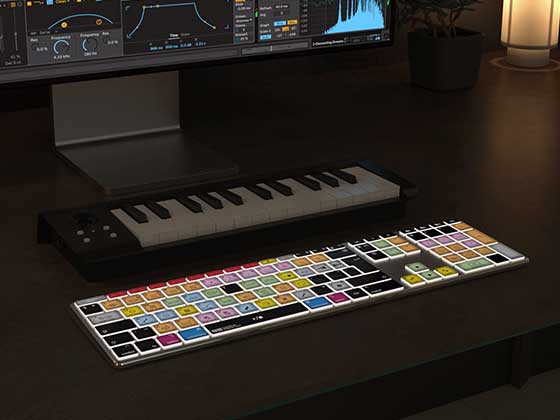
Once your monitor is accurately displaying your footage, the next step is making the editing and grading process as efficient as possible. Editors Keys shortcut editing keyboards are designed for exactly this purpose, with software-specific shortcuts mapped directly onto the keys so that commonly used commands are easier to find, learn and remember.
Instead of constantly reaching for menus or trying to remember which combination of keys performs a particular operation, an Editors Keys shortcut keyboard gives you a visual reference directly in front of you. This can be particularly useful when learning a new editing application, as the keyboard layout gradually helps you memorise shortcuts through repetition.

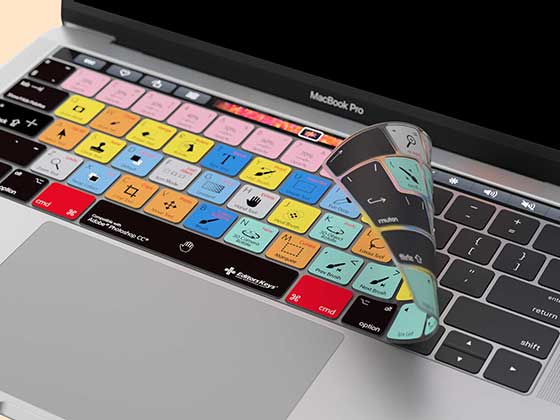
Editors Keys offers shortcut keyboards and silicone editing keyboard covers for popular creative software, allowing you to tailor your setup around the applications you use every day. The shortcut covers can also be placed over a compatible keyboard, providing a convenient and portable way of keeping your editing shortcuts visible without replacing the entire keyboard.
For editors who want a dedicated keyboard, the AB10 Air Wireless Backlit Shortcut Keyboard provides a wireless setup with backlighting, making it a good option for a clean professional workstation. The AB10 Core Wired USB-C Backlit Shortcut Keyboard provides a direct wired connection and backlit keys, making it particularly suitable for editors who prefer a reliable cable connection while working in applications such as Premiere Pro, Final Cut Pro, DaVinci Resolve and other creative software.
When you combine a colour-accurate monitor with a shortcut editing keyboard, you can improve two of the most important parts of the post-production process: seeing your footage correctly and interacting with your editing software efficiently.
Which Colour-Grading Monitor Should You Buy in 2026?
The best choice ultimately depends on the type of work you do. If you need the highest level of dependable colour accuracy for professional post-production and have the budget, the EIZO ColorEdge CG3100X is the standout choice. Its DCI 4K resolution, wide gamut, HDR support, uniformity technology and integrated calibration system make it exceptionally well suited to demanding colour-critical work.
For an extremely high-end HDR and 8K workflow, the ASUS ProArt PA32KCX is one of the most technically impressive displays available. Its 8K resolution, 4,032-zone Mini LED backlight and built-in colourimeter make it a specialist tool for users who genuinely need its capabilities.
For most independent professionals, the BenQ SW272U is arguably the more sensible investment. Its 4K resolution, 99% DCI-P3 and Adobe RGB coverage, hardware calibration and strong colour-management features provide an excellent professional workflow at a considerably lower price.
The ASUS ProArt PA32UCE is another strong option for editors who want a large 4K professional display with built-in calibration without spending thousands, while the ASUS ProArt OLED PA32UCDM is particularly attractive for editors who want the contrast and HDR performance of QD-OLED alongside accurate colour reproduction.
Whichever monitor you choose, remember that buying a colour-accurate display is only the beginning. Proper calibration, controlled room lighting and an appropriate colour-managed workflow are essential if you want your grading decisions to remain consistent from your editing workstation through to the finished video.
And once your display is giving you an accurate representation of your footage, an Editors Keys shortcut keyboard or silicone editing cover can help speed up everything happening around it, giving you quicker access to the tools and commands you use throughout the editing and colour-grading process.
