

DISCLAIMER: We are neither promoting nor discouraging the usage of ai in audio production! This blog is simply highlighting the different uses available within the realm of music and audio production, allowing you to make your own informed decision. (Scroll to the bottom for the author's opinion)
Artificial intelligence has become one of the most talked-about developments in modern music production. Depending on who you ask, it's either the next great leap forward for creativity or one of the biggest threats musicians have ever faced. The truth is considerably more nuanced.
Much of the debate centres around generative AI systems that can compose songs, mimic artists or produce complete pieces of music with little human input. These tools have sparked genuine concerns throughout the music industry, raising important questions surrounding originality, copyright, ethics, artistic value and the future of human creativity. However, focusing solely on AI-generated music overlooks the many practical ways artificial intelligence is already helping musicians, producers, composers, engineers and educators every day.
From removing background noise during podcast recordings to separating stems from old stereo masters, helping identify chords, suggesting drum grooves, speeding up mixing and restoring damaged recordings, AI has quietly become another production tool sitting alongside compressors, equalisers, synthesisers and DAWs. Like any tool, its value depends entirely on how it's used. For many producers, AI is proving most useful when it removes repetitive technical tasks, leaving more time for the genuinely creative parts of making music.

AI Isn't Just About Making Songs
When headlines discuss AI in music, they almost always focus on systems that generate complete songs. While these certainly exist, they're only a small part of what's happening inside modern production software.
Today's DAWs and music applications increasingly use machine learning to solve practical problems:
-
Cleaning noisy recordings
-
Detecting tempo
-
Separating instruments
-
Suggesting harmonies
-
Correcting pitch
-
Matching loudness
-
Organising sample libraries
-
Assisting with mixing
-
Creating practice accompaniments
These are tasks that traditionally consumed hours of manual editing. Rather than replacing musicians, many of these features simply remove tedious work from the production process.
Stem Separation Has Changed Music Production
One of the most genuinely useful AI breakthroughs is stem separation.
Only a few years ago, separating vocals from a finished stereo mix was incredibly difficult. Traditional methods relied on phase cancellation and frequency filtering, often producing poor results full of digital artefacts. Modern machine learning has dramatically improved this process.
AI can now analyse an audio recording and intelligently separate it into individual stems such as:
-
Vocals
-
Bass
-
Drums
-
Guitar
-
Piano
-
Other instruments
The quality continues improving every year. This has opened entirely new creative possibilities.
Remixing
Producers can isolate vocals from older recordings for remixes without needing access to the original multitrack session files. This allows DJs, producers and remix artists to reinterpret classic songs, create new arrangements or apply modern production techniques while working with individual elements that were once permanently combined in a stereo mix.
Sampling
Instead of sampling entire stereo mixes, individual instruments can be extracted for creative manipulation. A producer might isolate a bass line, piano part or vocal phrase and process it independently with effects, pitch shifting or time stretching, opening up new creative possibilities while reducing the unwanted bleed from other instruments.
Learning Songs
Students can isolate bass parts, guitar performances or drum grooves to study techniques more clearly. Being able to hear an individual instrument without competing sounds makes it easier to identify notes, rhythms, playing styles and subtle performance details, making transcription and learning by ear far more accessible.
Practice
Musicians can remove their own instrument from a song and play along as if performing with the original band. Whether it's a guitarist removing the guitar track, a drummer muting the drums or a vocalist creating an instrumental backing track, stem separation provides a much more engaging and realistic practice experience than simply playing over the full mix.
Restoration
Poorly mixed archive recordings can often be improved by separating instruments before remixing. Engineers may be able to rebalance levels, reduce masking between instruments, apply more targeted processing or restore clarity to recordings that were originally limited by the mixing technology of their time.
Many modern AI-powered tools can now perform stem separation in just a few minutes, producing results that would previously have required specialised software, painstaking manual editing or access to the original recording sessions. While the technology isn't perfect and may occasionally introduce minor artefacts, its speed and quality have made it an invaluable addition to the workflows of many producers, educators and audio engineers.

AI Session Musicians Are Becoming Surprisingly Useful
One of the more interesting developments comes from AI-assisted virtual musicians. Rather than writing complete songs, these systems help flesh out ideas you've already created.
For example, modern DAWs can generate:
-
Drum performances
-
Bass lines
-
Keyboard accompaniments
-
Rhythm guitar suggestions
-
Simple accompaniment parts
A songwriter might record:
-
Vocals
-
Acoustic guitar
-
Chord progression
The software can then generate a basic rhythm section to help develop the arrangement. This isn't necessarily the finished performance. Instead, it acts much like having a rehearsal band available whenever inspiration strikes, giving the musician/songwriter something to "bounce ideas off of"
Many writers replace these generated parts with real musicians later, while others use them throughout demo production. The AI speeds up experimentation without preventing human creativity.
Logic Pro's AI-Assisted Features
Apple has steadily introduced AI-powered assistance throughout Logic Pro.
Some of the most useful examples include:
Session Players
Logic's Session Drummer has existed for years, but the platform now includes intelligent bass and keyboard players capable of adapting to your arrangement.
Rather than programming every note manually, users can:
-
Choose playing styles
-
Adjust complexity
-
Increase or reduce fills
-
Control dynamics
-
Change feel
-
Experiment with genres
These performances remain editable after generation, allowing producers to refine ideas rather than accepting whatever the software creates. For songwriters working alone, this can dramatically speed up arranging.

Stem Splitter
Logic now includes built-in AI stem separation. Instead of purchasing dedicated software, users can separate vocals, bass, drums and instruments directly inside the DAW.
This simplifies remixing, sampling and educational analysis.

ChromaGlow
Logic also uses machine learning to model the behaviour of analogue hardware, recreating the subtle harmonic distortion, saturation and tonal colour associated with classic recording equipment. Rather than simply making a track louder or more distorted, ChromaGlow adds the kinds of harmonic richness and warmth that engineers have long prized in vintage preamps, tape machines and valve hardware.
Producers can use it to add extra character to vocals, drums, guitars, synths or even an entire mix, helping otherwise clean digital recordings feel fuller and more organic. With a range of different saturation styles available, it offers a quick way to experiment with analogue-inspired tones without needing access to expensive outboard equipment, while still allowing plenty of manual control over the final sound.

AI Mixing Assistants
Mixing remains one of the most technically demanding aspects of music production. Although experienced engineers still make creative decisions, AI increasingly helps with technical groundwork.
Modern AI mixing assistants can:
-
Suggest EQ adjustments
-
Detect problematic frequencies
-
Balance levels
-
Recommend compression settings
-
Identify masking between instruments
-
Improve vocal intelligibility
-
Optimise loudness
Importantly, these systems rarely "mix the song" perfectly. Instead, they provide a strong starting point. Experienced producers often adjust everything afterwards, beginners benefit because they receive guidance rather than facing hundreds of plugin settings with no idea where to begin.

Smarter Noise Reduction
Cleaning recordings used to involve painstaking manual editing.
Today's AI noise removal tools can distinguish between:
-
Speech
-
Singing
-
Guitar
-
Piano
-
Wind
-
Hum
-
Fans
-
Traffic
-
Air conditioning
-
Room noise
This makes it possible to rescue recordings that would once have been unusable.
Podcasters, voice-over artists and home studio musicians benefit enormously from these advances. Instead of recording everything again, AI restoration can often clean the audio in seconds.
AI Mastering
Mastering services powered by AI have become increasingly common.
These systems analyse your mix before applying processing designed to:
-
Improve tonal balance
-
Increase loudness
-
Control dynamics
-
Match commercial reference levels
For independent artists without access to a professional mastering engineer, these services provide an affordable alternative. That said, many experienced engineers argue that mastering remains a highly creative process requiring musical judgement that algorithms cannot fully replicate.
For some projects, AI mastering may be perfectly adequate. For others—particularly commercial releases where every nuance matters—a human mastering engineer may still deliver superior results.

Automatic Chord Detection and Harmony Analysis
Many modern DAWs can now identify:
-
Chords
-
Keys
-
Tempo
-
Time signatures
This makes importing recordings significantly easier.
Instead of manually working out every chord, producers can begin arranging almost immediately. These features also benefit educators and students studying harmony. Writers collaborating remotely can quickly understand unfinished ideas without needing extensive notes.
Audio Restoration and Repair
Machine learning has transformed restoration work.
AI can now intelligently repair:
-
Vinyl crackle
-
Tape hiss
-
Digital clipping
-
Distortion
-
Missing frequencies
-
Pops and clicks
-
Wind noise
-
Damaged recordings
Archive engineers use these technologies to preserve historical recordings that may otherwise have been lost forever.
This represents one of AI's least controversial applications because it enhances existing performances rather than replacing them.

Sample Organisation and Intelligent Search
Many producers own sample libraries containing hundreds of thousands of sounds.
Finding the right kick drum or synth texture can sometimes take longer than making music.
AI-powered browsers can automatically categorise samples by:
-
Instrument
-
Mood
-
Energy
-
Genre
-
Timbre
-
Rhythm
-
Tonality
Some systems even let users search using natural language.
For example:
-
"Warm analogue bass"
-
"Aggressive industrial kick"
-
"Dreamy ambient pad"
Instead of manually browsing folders for twenty minutes, producers can locate suitable sounds almost instantly.
Intelligent MIDI Generation
Several DAWs now include AI features capable of suggesting:
-
Drum grooves
-
Bass lines
-
Chord progressions
-
Melodies
-
Arpeggios
-
Rhythmic variations
This is were the lines begin to blur for people when it comes to ai being used in the creative process, though again, these ideas aren't necessarily intended as finished compositions.
Many producers treat them like creative prompts. Sometimes an unexpected suggestion inspires an entirely new direction. Other times it's simply quicker than drawing every MIDI note manually before editing it to taste.

AI in Popular Digital Audio Workstations
Artificial intelligence is no longer limited to specialist software.
Many major DAWs now include intelligent features designed to improve workflow.
Logic Pro
-
Session Players
-
Stem Splitter
-
ChromaGlow
-
Smart Tempo
Pro Tools
-
AI speech enhancement
-
Intelligent dialogue cleaning
-
Machine learning restoration tools through integrated plugins
Cubase
-
Audio-to-MIDI improvements
-
Chord Assistant
-
VariAudio enhancements
-
Intelligent composition tools
Ableton Live
While Ableton focuses more on creative workflow than overt AI branding, producers commonly integrate machine-learning plugins for sound generation, sample organisation and intelligent MIDI assistance.
Studio One
Studio One incorporates intelligent mastering workflows, automatic loudness tools, chord detection and various production assistants that streamline recording and mixing.
FL Studio
FL Studio continues expanding AI-assisted features through integrated tools and third-party plugin support, particularly for sample organisation, mastering assistance and MIDI generation.
Reason
Reason increasingly benefits from Rack Extensions and third-party AI-powered plugins, giving producers access to stem separation, mastering assistance, vocal processing and intelligent composition tools without changing their familiar workflow.

The Controversial Side of Generative AI
No discussion would be complete without acknowledging the concerns surrounding AI-generated music. Many musicians worry that generative AI systems are trained using enormous collections of existing music created by human artists.
This has raised important questions regarding:
-
Copyright
-
Artist consent
-
Fair compensation
-
Ownership
-
Attribution
-
Originality
There is also a philosophical debate.
Music has traditionally been valued not just because of the finished recording, but because of the human experiences behind it. Listeners often connect with songs because they express emotion, struggle, joy, grief or lived experience. Critics argue that a computer-generated song may imitate the surface characteristics of music while lacking the personal intent that gives art much of its meaning.
Supporters, meanwhile, argue that AI can simply become another instrument—one that still depends on human direction, editing and taste. These discussions are unlikely to disappear any time soon, and opinions across the music community remain deeply divided.
AI Is Most Powerful When It Removes Repetitive Work
One theme appears consistently across many successful AI applications.
The technology performs best when handling repetitive technical tasks rather than replacing creative decisions.
Removing:
-
Noise
-
Tedious editing
-
Stem extraction
-
File organisation
-
Tempo detection
-
Technical analysis
gives musicians more time to focus on:
-
Songwriting
-
Performance
-
Arrangement
-
Sound design
-
Experimentation
-
Emotional expression
Many producers see this as the healthiest balance: the technology assists the creative process without becoming the creative process.

Faster Workflows Still Depend on You
Whether you embrace AI features or avoid them entirely, one fact remains unchanged: Your workflow has a greater impact on productivity than almost any individual plugin. Professional producers aren't simply faster because they know more music theory. They're faster because they spend less time searching through menus and more time creating. Keyboard shortcuts remain one of the simplest ways to improve efficiency inside any DAW.
Instead of reaching for menus hundreds of times during a session, experienced producers rely on shortcuts for editing, recording, zooming, trimming, quantising, splitting clips, bouncing tracks and navigating large projects. Those seemingly tiny time savings quickly add up over the course of a production.
Speed Up Your Workflow with Editors Keys
Whether you're producing in Logic Pro, Ableton Live, Cubase, Pro Tools, Studio One, Reason, FL Studio or another popular DAW, efficient editing remains just as important as creative inspiration.
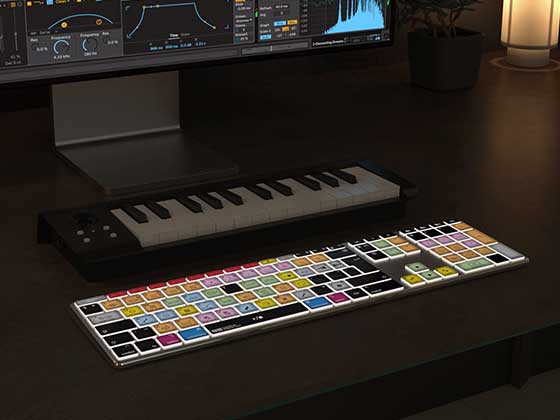
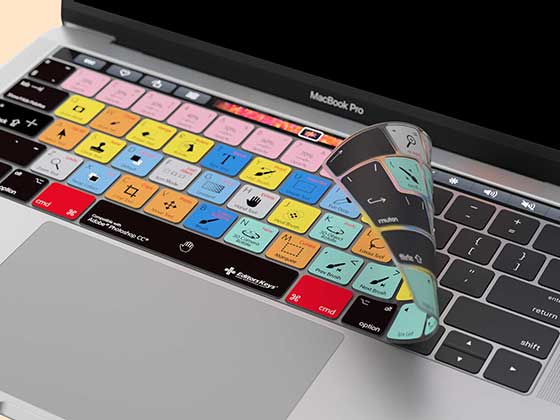
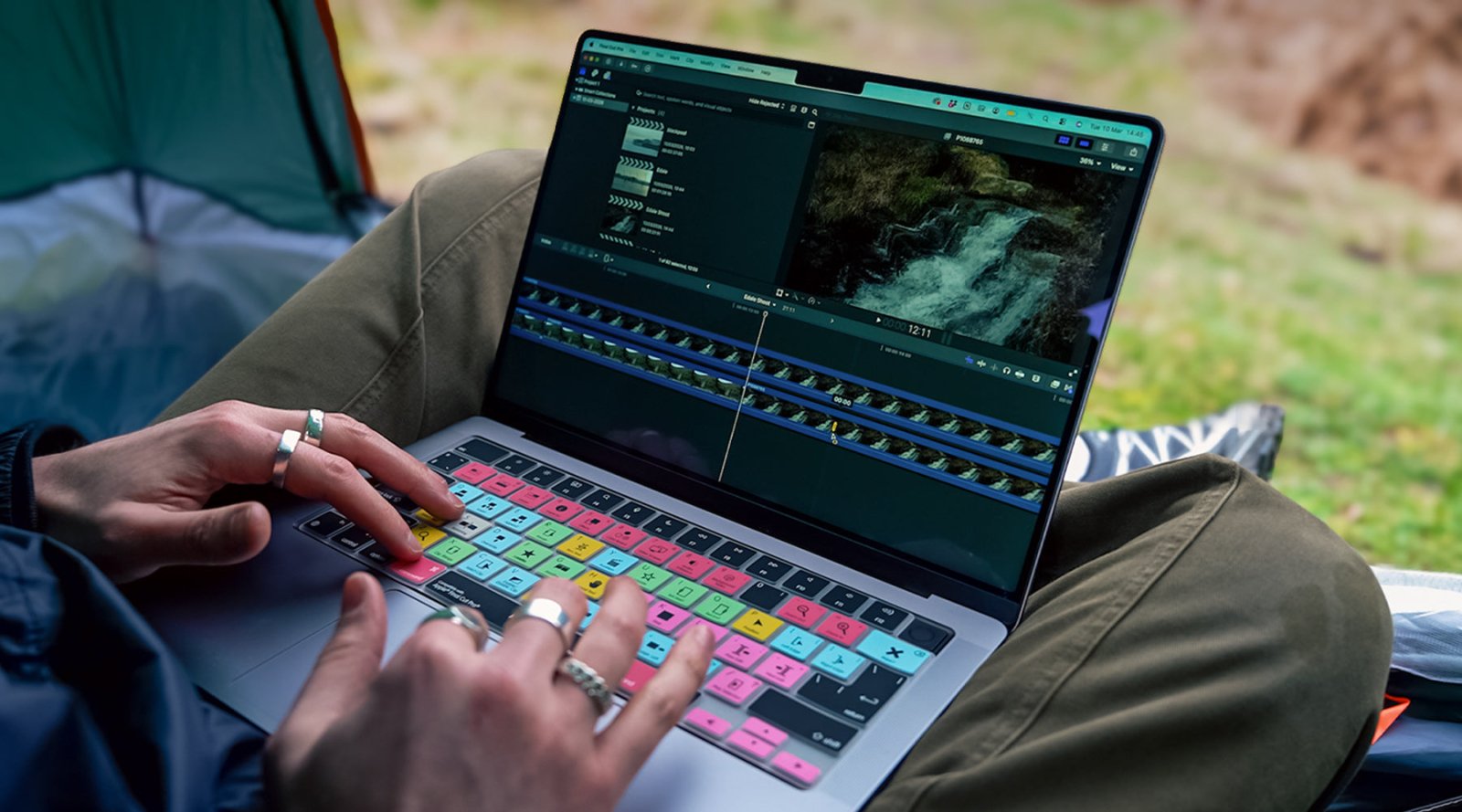
Editors Keys shortcut keyboards and keyboard covers place the most commonly used shortcuts directly in front of you, making it easier to learn and remember essential commands without constantly interrupting your workflow to search menus or memorise key combinations. Instead of relying on trial and error, producers can build muscle memory naturally while working.

This is particularly valuable for:
-
New producers learning a DAW
-
Experienced engineers moving between different software
-
Music students
-
Songwriters
-
Mixing engineers
-
Studio professionals working under tight deadlines
As AI tools continue to automate certain technical aspects of production, efficient human workflows become even more valuable. The quicker you can navigate your DAW, edit recordings and access the tools you need, the more time you'll have to focus on what technology still can't replace: your musical ideas, artistic judgement and creative vision.
Editors Keys offers dedicated shortcut keyboards and keyboard covers for many of the industry's most popular production platforms, including Logic Pro, Ableton Live, Cubase, Pro Tools, Studio One, Reason and many others, helping producers work faster while keeping their attention where it belongs—on the music.
Final Thoughts
Artificial intelligence is unlikely to replace musicians any time soon, but it is changing the way music is created. Some applications remain controversial, particularly those that generate complete songs or imitate existing artists. These technologies raise complex legal, ethical and artistic questions that the music industry is still working through.
At the same time, many AI-powered features have already become practical tools that solve everyday production challenges. Stem separation, intelligent session players, noise reduction, restoration, mastering assistance and sample organisation are helping musicians spend less time on repetitive tasks and more time making creative decisions.
For producers, engineers and songwriters, the future is likely to involve a combination of human creativity supported by increasingly capable production tools. The emotion, intent and originality behind a great piece of music still come from people—but with the right technology and an efficient workflow, getting those ideas from imagination to finished track has never been more accessible.
Author's Opinion:
As a musician who writes and records my own music, I am against the concept of AI generated music. I find it to be soulless, talentless and a waste of musical potential. Part of the fun of learning an instrument, producing and creating music is the whole process, the gradual progression and improvement that can only take place through sheer practice and dedication over time (sometimes years). To completely bypass all of that and instead resort to written prompts and generative ai which can only copy and emulate aspects of other real music, as opposed to creating something genuine and original, feels almost insulting. HOWEVER: I do believe that ai can have some uses in some areas of music production, just not generative!
Things like stem separation, chord analysis, audio repair/restoration and mastering assistance can help a producer or songwriter with their project - Assisting them with the task whilst not overtaking the job completely. There are some useful ai tools within music production that can greatly help with certain aspects and shouldn't be overlooked, but ai should , and will, never be a replacement for a real human musician, producer, or audio engineer.
What are your thoughts on ai editing tools within music production? Do you think that these features have some useful applications, or are you completely against all ai integration? Let us know in the comments below, we'd be intrigued to hear your thoughts!
2 comments
Sachin
Thanks for sharing such an amazing blog music recording studios near me
Thanks for sharing such an amazing blog music recording studios near me
Aaron Beatz
I agree that ai has some useful applications in music production, but ai generated music needs to die a death
I agree that ai has some useful applications in music production, but ai generated music needs to die a death