
The DJI Osmo 360 II is DJI's latest 360-degree camera, designed to give videographers, vloggers and content creators more flexibility when filming. With native 8K recording at 60 frames per second, improved image quality, intelligent subject tracking and the ability to capture multiple angles from a single take, it offers an interesting alternative to conventional action cameras and vlogging setups.
In the supplied first look review, the camera was tested over a week or two on a boat in St Ives, while walking around Cambridge and inside a car. These tests provide a useful insight into what the Osmo 360 II can do in everyday filming situations, how it improves upon previous 360 cameras and whether it could become a camera you reach for regularly rather than saving it for occasional creative shots.

What is the DJI Osmo 360 II?
The DJI Osmo 360 II is a 360-degree camera that captures the scene around its lenses, allowing you to decide which direction to show when editing. Unlike a conventional action camera, which records a fixed field of view, a 360 camera gives you the ability to choose your composition after filming. You can capture yourself, the scenery, the road ahead and anything happening around you in the same recording.
This makes 360 cameras particularly useful for solo creators, travel vloggers, action videographers and anyone filming situations that are difficult to repeat. Instead of stopping to reposition a camera for every angle, you can record the entire scene and select the most useful views afterwards. The Osmo 360 II builds on this concept with improved image quality and features intended to make it more practical for everyday use.
Native 8K 60fps 360-degree video
The headline feature of the DJI Osmo 360 II is its native 8K recording at 60 frames per second. The supplied review describes it as the industry's first native 8K 60fps 360-degree camera, making it a particularly interesting option for creators who want high-resolution footage with the flexibility to reframe their shots later.
Recording in 8K gives you more detail to work with when selecting a conventional 16:9 composition from the original 360-degree image. Because the resolution is spread across a much wider field of view than a standard camera, having more pixels available is important when cropping into a smaller part of the scene. It can also give you greater flexibility when creating close-up compositions or exporting footage for high-resolution displays.

The 60fps recording mode is equally useful. On the boat in St Ives, the reviewer found that the footage remained smooth and sharp despite the movement of the water. Higher frame rates can also be slowed down in post-production to create smoother, more cinematic motion. For example, 60fps footage placed on a 30fps timeline can be slowed to 50% speed, allowing you to emphasise movement without needing a separate slow-motion camera.
For action videographers, travel creators and anyone filming moving subjects, the combination of 8K resolution and 60fps recording gives you more options when editing. You can capture fast-moving scenes, slow down selected moments and choose your final framing without having to commit to a single angle during filming.

Improved dynamic range and the 1-inch panoramic sensor
The Osmo 360 II features a 1-inch panoramic image sensor, alongside a claimed dynamic range of up to 14.5 stops. Dynamic range describes the amount of detail a camera can preserve between the brightest and darkest parts of an image. A wider range is particularly useful when filming outdoors, where a bright sky might appear in the same frame as shaded buildings or darker foreground details.
The reviewer tested the camera around Cambridge on a bright September day, with sunlight, buildings and shadows all appearing in the same scenes. The footage reportedly held onto detail across these different exposure levels, making it easier to achieve a balanced image in post-production.

This is an important improvement for video editors. A scene may contain a large amount of bright sky, reflective surfaces or deep shadows, and the ability to retain detail gives you more options when adjusting exposure, highlights, shadows and contrast. The supplied footage suggests that the Osmo 360 II offers a more capable starting point for colour grading than the previous 360 cameras the reviewer had used.
AI Super Night 2.0 low-light mode
The DJI Osmo 360 II also includes an AI Super Night 2.0 mode for low-light filming. The reviewer had not yet completed a proper night-time test, so this feature remains one to explore in a full review.
For anyone filming in the evening, in dimly lit streets or during night-time travel, low-light performance can make a major difference. 360 cameras have to capture a wide scene with small details spread across the frame, so improvements in noise reduction and image processing could be particularly valuable. The transcript confirms that this is an area DJI has upgraded, but it does not establish how well the mode performs in real-world darkness.

AI high-precision smart stitching
One of the biggest problems with 360-degree cameras is the stitching seam. Because the camera uses two lenses to capture the surrounding scene, the footage must be combined into a single spherical image. The area where the two views meet can sometimes produce warped lines, misaligned objects or visible distortion, particularly when something is close to the camera.
DJI's new AI high-precision smart stitching is intended to reduce these problems. In the supplied review, the camera was tested while walking around Cambridge, with people and railings crossing the stitch line. The reviewer deliberately moved the camera around without worrying about which direction the lenses were facing, then found that the seam was difficult to identify in most of the resulting edits.

This is a meaningful improvement for anyone who wants to film naturally. With older 360 cameras, you may need to position the camera carefully to keep important objects away from the stitching area. Improved stitching gives you more freedom to capture spontaneous moments, moving subjects and close-up details without worrying as much about the technical limitations of the two-lens system.
Stitching can still depend on the distance between the camera and the subject, the angle of the lenses and the movement of the scene. However, the reviewer's experience suggests that the Osmo 360 II has made this a much less noticeable problem in everyday filming.
Why a 360 camera is useful for car vlogging
The car footage in the first look review is one of the clearest examples of how a 360 camera can change the way you film. When creating a car vlog, a conventional camera setup might require one camera facing the driver, another pointing through the windscreen and additional cameras for the wing mirrors or rear of the vehicle. Every time you need to change the shot, you may have to stop, reposition the camera and record again.
With the Osmo 360 II mounted in one position, you can capture all of these views in a single take. The reviewer demonstrates how the camera can show the driver talking to the audience, the road ahead, the side of the car and passing scenery, all from the same recording.

For a solo creator, this is a considerable advantage. You can focus on driving and talking rather than constantly managing camera equipment. It also means you have more opportunities to capture unexpected moments. If you drive past an interesting building, a castle or a new development, you can choose that angle afterwards instead of having to return to the same location or set up another camera.
The flexibility is particularly useful for travel vloggers and automotive creators who want a mixture of talking-head footage, driving shots and environmental cutaways. A single 360 recording can provide enough material for several different shots, reducing the need for additional equipment and repeated takes.
120-megapixel HDR 360-degree photos
The Osmo 360 II can capture 120-megapixel HDR 360-degree still photographs. This provides a very high-resolution spherical image, giving you considerable flexibility when selecting different compositions after the photo has been taken.
For travel photographers, this means you can capture an entire location and later choose which part of the scene to emphasise. You might want to show a wide landscape, crop towards a particular building or create a more conventional photograph from the original 360-degree image. HDR processing can also help preserve detail across bright and dark areas, although the final result will depend on the lighting and the camera's processing.
The reviewer describes the feature as offering plenty of room to crop into different compositions. It is a useful addition for creators who want both video and still photography from the same compact camera.
Spotlight follow: subject tracking after filming
Spotlight follow is one of the features that makes the Osmo 360 II feel more like a conventional vlogging camera. It allows you to select a subject after filming and have the camera's software track that subject, keeping them centred in a normal flat video.
This is particularly useful when filming yourself. With a conventional camera, you need to frame yourself correctly before pressing record, and you may need a gimbal or a camera operator to keep you in the right position while moving. With a 360 camera, you can capture the entire scene and choose the subject afterwards.

The supplied review demonstrates the feature while walking, with the camera tracking the presenter as he moves. The reviewer notes that it could be useful for vlogging because it reduces the need to keep manually reframing the image during editing. You can capture the surrounding environment while retaining the ability to produce a straightforward, subject-focused video.
For editors, this could be a valuable time-saving feature. Rather than manually keyframing the camera angle throughout a clip, the tracking system can help maintain a consistent composition. It is especially useful for walking tours, travel videos, tutorials and other situations where the subject moves around the frame.
Close-up image quality and single-lens filming
The reviewer also spends time testing the camera's close-up image quality, which has traditionally been a weakness of many 360 cameras. Because the lenses capture such a wide field of view, objects close to the camera can sometimes appear soft, distorted or lacking in detail when the footage is reframed.
During the Cambridge walk, the reviewer filmed a close-up of a sign and checked the result through the DJI app on an iPhone. He found that the image remained detailed even at close range, suggesting that the Osmo 360 II has improved the quality of close-up footage.
This matters because it makes the camera more versatile. If you are filming a product, a sign, a building or a subject close to the lens, you want the footage to remain useful when you crop into it. The reviewer explains that previous 360 cameras often ended up being used for special shots and then put away because their single-lens and close-up quality was not good enough for everyday work.
The Osmo 360 II is intended to address that limitation by offering better image quality in both 360-degree and single-lens modes. The result is a camera that can be used for conventional vlogging, travel footage and action shots, as well as more unusual 360-degree compositions.
Dual recording: two views from one camera
Dual recording is another feature that the reviewer used extensively in the car. The camera can capture a forward-facing view and a selfie view at the same time, allowing you to create multiple usable angles from one recording.
For a car vlog, this means you can record yourself speaking to the camera while also capturing the road ahead. You can then use the two angles together in your edit, cutting between the driver and the surroundings without needing to mount a second camera.

This can also be useful for walking tours, interviews and travel videos. A single recording can provide a view of the person filming and a view of the environment, giving you more flexibility when putting together a finished video.
The ability to record multiple perspectives at once is one of the strongest arguments for choosing the Osmo 360 II over a conventional action camera. It gives you more material to work with, while also reducing the amount of equipment you need to carry.
4K reframe export and AI one-tap editing
Once you have recorded your 360 footage, the next challenge is turning it into a conventional video. DJI has added a proper 4K reframe export, allowing you to create a flat video from the spherical footage while retaining the ability to choose the viewing angle.
This is useful for creators who want to publish on YouTube, Instagram, TikTok or other platforms that use conventional video formats. Instead of delivering the full 360-degree image, you can select the angle you want and export a standard video.
The camera also includes an AI one-tap edit function. This automatically turns 360 footage into a finished flat video, which could save a considerable amount of time for anyone who does not want to manually reframe every shot.
The reviewer points out that he enjoys manually reframing 360 footage, but recognises that many creators simply want to get a video finished quickly. The one-tap editing feature is therefore particularly appealing for vloggers and social media creators who need to produce content efficiently.
For more advanced editors, manual reframing remains valuable because it allows you to control the composition, timing and movement of the shot. The automatic editing function is best understood as an additional option for quick exports rather than a replacement for a full editing workflow.
Hardware improvements: replaceable lenses and built-in storage
The Osmo 360 II includes a second-generation ultra-hard optical coating on its lenses. This is designed to improve durability and protect the optical surfaces during everyday use. The reviewer also highlights a feature that is particularly useful for anyone who regularly uses an action camera: the lenses are user-replaceable.
360-degree camera lenses protrude from the body, making them more vulnerable to scratches and damage than the lens on a conventional camera. If you accidentally knock the camera against a surface or damage one of the lenses, having the ability to replace the lens module means you do not necessarily have to replace the entire camera.

The camera also includes 105GB of built-in storage. This allows you to start recording without a memory card, which is useful if you are travelling or find yourself in a situation where you need to capture footage quickly. It also provides a convenient backup option when you have forgotten to bring a card or filled your external storage.
Another small but useful addition is NFC pairing. Rather than going through the usual Bluetooth connection process, you can use NFC to make a quick connection to your phone. The reviewer says this makes the pairing process noticeably faster, which is helpful when you want to get the camera ready for filming without spending time navigating connection settings.
Is the DJI Osmo 360 II a do-it-all camera?
The central point of the supplied first look review is that the Osmo 360 II feels more like a camera you could use every day, rather than a specialist tool that only comes out for unusual shots.
Previous 360 cameras have often been useful for capturing a unique perspective, filming a stunt or recording a scene that would be difficult to achieve with a conventional camera. However, the reviewer says that their limited close-up quality and single-lens performance meant they were often put away after the special shot had been captured.
The Osmo 360 II aims to overcome that limitation by combining high-quality 360-degree footage with conventional filming features. You can use it as a normal vlogging camera, shoot in single-lens mode, record dual perspectives and still retain the ability to reframe a full 360-degree recording whenever you need it.
The reviewer also highlights D-Log M recording, which gives creators more flexibility when colour grading their footage. Combined with the improved dynamic range and 8K resolution, this makes the camera a particularly interesting option for videographers who want to capture footage that can be edited and graded to match other cameras.
The result is a camera that could be useful for a much wider range of situations, from filming a car vlog to recording travel footage, capturing action shots or creating a more traditional talking-head video.
Editors Keys: speed up your 360 video editing workflow
Once you start filming in 8K and creating multiple reframed angles from the same 360-degree recording, the editing process can become more involved. You may have several versions of a clip, multiple angles to choose from and a large amount of footage to organise. Having an efficient editing workflow is important, especially if you are working on regular YouTube videos, travel content or client projects.
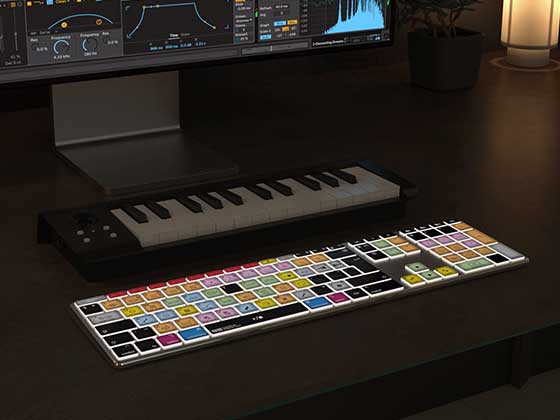
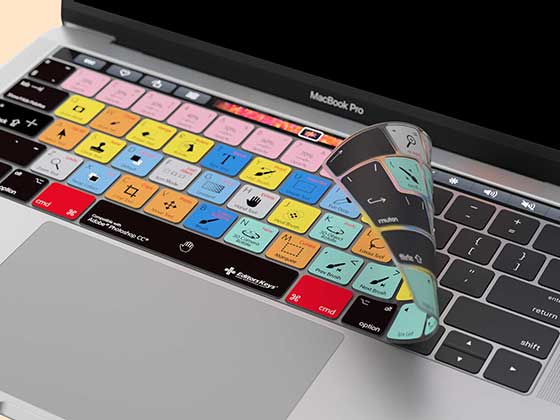
Editors Keys shortcut editing keyboards and silicone keyboard editing covers are designed to make video editing faster and easier. They feature the shortcuts for popular editing software mapped out onto the keys, allowing you to see the commands you need while working. Instead of repeatedly searching through menus or trying to remember keyboard combinations, you can quickly identify the shortcut you want and use it as part of your normal editing process.
This is particularly useful when working with software such as Premiere Pro, Final Cut Pro, DaVinci Resolve, Avid Media Composer and other popular video editing programmes. A shortcut keyboard can help you move between tools, trim clips, navigate the timeline and perform common editing actions more efficiently, while also making it easier to memorise shortcuts through repeated use.
For creators using the Osmo 360 II, the benefits are especially relevant when working with long recordings and multiple reframed shots. Whether you are cutting a car vlog, selecting the best angles from a travel video or preparing 4K exports for social media, an efficient keyboard workflow can help reduce the time spent on repetitive editing tasks.
Editors Keys DJI D-Log LUT packs
The DJI Osmo 360 II's D-Log M recording mode is designed to provide greater flexibility during colour grading. Log footage is captured with a flatter appearance, preserving more information for adjustments to contrast, highlights, shadows and colour. This gives editors more control over the final look, particularly when matching footage from different cameras or creating a consistent style across a video.
Editors Keys offers DJI D-Log LUT packs created to pair with DJI footage. LUTs, or Look-Up Tables, apply a predefined colour transformation to video, helping you achieve a more balanced and consistent image with less manual adjustment. They can be useful as a starting point for colour grading, allowing you to establish a look quickly before making your own creative refinements.
For anyone filming with DJI cameras, drones or the Osmo 360 II, these LUT packs can help streamline the colour grading process. They are particularly useful for creators who want to achieve a consistent look across travel videos, cinematic sequences and YouTube content without spending excessive time adjusting every clip individually.
You can find the Editors Keys DJI D-Log LUT packs and colour grading tools at www.editorskeys.com.
DJI Osmo 360 II vs previous DJI 360 cameras
The supplied transcript focuses on the Osmo 360 II's improvements rather than providing a detailed comparison with every previous DJI model. However, the key areas of progress are clear from the reviewer's experience.
The most significant improvements are in image quality, stitching, subject tracking and ease of use. The reviewer found that the camera retained detail in challenging lighting, produced smoother footage on a moving boat and made it easier to capture multiple angles from a single take. The combination of these features is what makes the Osmo 360 II stand out as a potential everyday camera.

Final verdict
The supplied first look review presents the DJI Osmo 360 II as a significant step forward for everyday 360-degree filming. The combination of native 8K 60fps video, improved dynamic range, better stitching, subject tracking, dual recording and a more practical editing workflow makes it a compelling option for videographers and vloggers.
The most impressive aspect is the flexibility of the camera. You can capture a full 360-degree scene, use it as a conventional vlogging camera, record multiple angles simultaneously and reframe the footage later. That gives you more options when filming, particularly if you are working alone or cannot repeat a shot.

The reviewer concludes that the Osmo 360 II is the first 360 camera he has used that feels like a do-it-all camera rather than a specialist tool. Its ability to capture high-quality footage in a variety of situations, combined with the convenience of reframing after filming, makes it a strong candidate for creators who want a versatile camera for everyday use.
For anyone considering the DJI Osmo 360 II, the next step is to explore the full review and real-world tests, particularly the low-light, slow-motion and underwater performance. In the meantime, the first look suggests that DJI has made meaningful improvements to the image quality and usability of its 360-degree camera range.
Be sure to check out our full Youtube review of the new DJI OSMO 360 II camera below!