
Whether you're producing electronic music, hip-hop, rock, pop or cinematic soundtracks, drums form the backbone of almost every track. One of the biggest strengths of Reason Studios is its ability to let you create custom drum machines from the ground up, giving you complete creative control over your beats.

If you're new to Reason, the rack-based interface can seem intimidating at first. However, once you understand the basics, building your own drum machine becomes straightforward and incredibly rewarding. Building your own drum machine in Reason Studios gives you complete control over the feel and character of your beats. Rather than relying on presets, you can create custom kits, shape individual sounds and develop rhythms that fit your music perfectly.
Why Build Your Own Drum Machine?
While Reason includes plenty of presets and ready-made drum kits, creating your own offers several advantages:
-
Complete control over every sound
-
Unique drum kits that stand out from stock presets
-
Better understanding of sequencing and rhythm
-
Easier customisation for different genres
-
Improved workflow as your production skills develop
Instead of relying on someone else's sounds, you can create something that perfectly fits your track.
Understanding Drum Machines in Reason
Unlike some DAWs that rely purely on piano roll programming, Reason offers multiple ways to build beats.
The classic Redrum Drum Computer remains one of the simplest and most intuitive drum sequencers available, using a traditional 16-step pattern layout that makes programming rhythms quick and visual. Reason also includes more advanced instruments and samplers for building custom kits and sequencing. The rack-based workflow encourages experimentation by combining devices and effects in flexible ways.
For beginners, Redrum provides an excellent starting point because you can immediately see how patterns are constructed and hear changes as you make them.

Step 1: Create a New Project
Open Reason Studios and create a new empty project.
You'll see the familiar layout consisting of:
-
The Rack
-
The Mixer
-
The Sequencer
-
The Browser
The Rack is where your drum machine will live.
Starting with an empty project keeps everything organised and makes learning much easier.
Step 2: Add a Drum Machine
Press Create Device and choose Redrum Drum Computer.
Reason automatically adds the instrument to your Rack and routes it into the mixer so it's ready to produce sound immediately.
You'll notice ten channels running vertically down the left-hand side.
Each channel represents a separate drum sound.
For example:
-
Channel 1 – Kick
-
Channel 2 – Snare
-
Channel 3 – Closed Hi-Hat
-
Channel 4 – Open Hi-Hat
-
Channel 5 – Clap
-
Channels 6–10 – Percussion or effects
You can assign any sound to any channel.

Step 3: Load Drum Samples
Every channel contains a sample slot.
Click the folder icon on a channel and browse your sample library.
For a simple starter kit choose:
-
Deep kick drum
-
Crisp snare
-
Closed hi-hat
-
Open hi-hat
-
Clap
-
Crash cymbal
-
Ride cymbal
-
Tom
-
Percussion
-
FX hit
Don't worry about perfection at this stage.
Learning how different sounds interact is far more valuable than finding the "perfect" sample.
Step 4: Understand the 16-Step Sequencer
Across the bottom of Redrum you'll see sixteen buttons.
These represent sixteen equal divisions of a bar.
Each button you activate tells that drum to play at that point.
Think of it like placing footsteps across a timeline.
For example:
-
Step 1 = Beat 1
-
Step 5 = Beat 2
-
Step 9 = Beat 3
-
Step 13 = Beat 4
The visual layout makes it easy to spot patterns.
Step 5: Program Your Kick Drum
Select the kick channel.
Activate:
-
Step 1
-
Step 9
Press Play.
You've already created the foundation of a basic four-on-the-floor rhythm.
Try adding extra kicks on Step 11 or Step 15 to hear how small changes affect the groove.
Step 6: Add the Snare
Now select your snare channel.
Turn on:
-
Step 5
-
Step 13
This places the snare on beats two and four.
Instantly your rhythm begins to sound like a complete drum pattern.
Step 7: Add Hi-Hats
Select the closed hi-hat.
Try activating every odd-numbered step:
1, 3, 5, 7, 9, 11, 13 and 15.
This creates steady eighth notes.
For faster energy, activate every single step for sixteenth notes.
Experiment by removing individual hits to create movement and groove.
Step 8: Add Percussion
Now introduce claps, toms or percussion.
Rather than repeating every bar identically, add occasional accents.
For example:
-
Clap on Step 13
-
Tambourine on Step 15
-
Tom fill before the loop restarts
Small variations keep listeners engaged.
Step 9: Adjust Velocity
Not every drum hit should be equally loud.
Redrum lets you change velocity values to simulate a human drummer.
Lower some hi-hat hits while keeping others louder.
The result feels far more natural than perfectly identical hits.
This simple adjustment can dramatically improve realism.
Step 10: Experiment with Swing
Perfectly quantised drums can sound robotic.
Reason allows you to introduce swing, shifting certain notes slightly later.
A touch of swing often adds groove without making the beat feel messy.
Try increasing swing gradually until the rhythm feels more relaxed.
Step 11: Shape Individual Sounds
Every channel has controls for:
-
Level
-
Pan
-
Pitch
-
Length
Lowering pitch can make kicks heavier.
Shortening hi-hats makes them tighter.
Panning percussion creates width across the stereo image.
Even small adjustments help your drum machine sound unique.
Step 12: Add Effects
One advantage of Reason's rack design is how easily effects can be added.
Try inserting:
Compression
Adds punch and consistency.
EQ
Removes unwanted frequencies and improves clarity.
Distortion or Saturation
Introduces warmth and aggression.
Reverb
Adds space to snares or percussion.
Delay
Useful for creative fills and transitions.
Don't overuse effects—subtle processing often produces the most professional results.

Step 13: Create Multiple Patterns
Most songs need variation.
Instead of repeating one loop forever, create several patterns:
-
Intro
-
Verse
-
Chorus
-
Bridge
-
Fill
-
Outro
Switching between patterns keeps your arrangement dynamic.
Even changing a single kick or hi-hat placement can make a section feel fresh.
Step 14: Convert Patterns to the Sequencer
Once you're happy with your pattern, transfer it into Reason's main sequencer for further editing.
This allows you to:
-
Rearrange sections
-
Add fills
-
Edit individual notes
-
Adjust timing
-
Automate effects
Many producers sketch ideas in Redrum before refining them in the sequencer for a full arrangement.
Tips for Better Drum Programming
Less is often more
It can be tempting to fill every available space with kicks, snares and percussion, but overcrowding a beat often reduces its overall impact. Giving each drum sound room to breathe creates a cleaner, more powerful groove and allows the most important elements to stand out. Sometimes removing a few notes can make a rhythm feel much stronger than adding more.
Use contrasting samples
Choosing sounds that complement each other is just as important as the pattern itself. For example, pairing a deep, punchy kick with a crisp snare and softer hi-hats helps each element occupy its own space in the mix. If every sample has similar frequencies or characteristics, the beat can quickly become muddy and lack definition.
Introduce variation
Real drummers naturally play with subtle differences every time they repeat a pattern. Adding occasional fills, changing a hi-hat rhythm, or moving a single snare hit can make your programmed drums feel much more organic. Even small changes every four or eight bars help keep the listener engaged.
Think about dynamics
Not every drum hit should be played at maximum volume. Adjusting the velocity of individual notes creates natural rises and falls in intensity, making the performance feel more human. Lowering certain hi-hats or ghost notes while emphasising key beats can add groove and movement to an otherwise static pattern.
Layer sounds
Combining multiple samples can produce richer and more unique drum sounds than relying on a single sample alone. For example, layering a punchy electronic kick with an acoustic kick can add both weight and attack, while stacking different snares can create extra depth and character. Experimenting with layers is a great way to develop your own signature sound.
Common Beginner Mistakes
Everything is too loud
New producers often turn every drum up to maximum volume, leaving little room for the rest of the mix. This can lead to distortion and make the track feel cluttered. Keeping sensible levels and leaving headroom allows other instruments and vocals to sit comfortably alongside your drums while making mastering much easier.
Every hit is identical
When every kick, snare or hi-hat plays at exactly the same volume and timing, the result can sound robotic. Introducing small velocity adjustments or slightly varying the timing of certain notes helps recreate the subtle imperfections of a real performance and gives your drum patterns much more personality.
Too many sounds
Loading every available percussion sample into a single pattern can quickly overwhelm the listener. Instead, start with a solid foundation of kick, snare and hi-hats before gradually introducing extra elements like claps, shakers or toms where they genuinely add value. Simplicity often creates the strongest grooves.
No arrangement changes
Repeating the exact same four-bar loop throughout an entire song can make even a good beat become repetitive. Create multiple variations for verses, choruses and transitions by adding fills, removing instruments or changing rhythms slightly. These small adjustments help maintain energy and keep the arrangement interesting from start to finish.
Ignoring effects
Dry drum samples can sometimes sound flat or disconnected from the rest of the mix. Applying basic processing such as EQ, compression, reverb or saturation can dramatically improve clarity, punch and cohesion. You don't need heavy effects either—even subtle adjustments can make a custom drum machine sound far more polished and professional.
Taking Your Drum Machine Further
As you become more comfortable, you can expand beyond simple sequencing.
Try:
-
Layering multiple kick samples
-
Automating filters
-
Using distortion creatively
-
Adding parallel compression
-
Building hybrid acoustic/electronic kits
-
Routing individual drums to separate mixer channels
-
Combining samplers and synthesis for completely original percussion
Reason's modular rack encourages experimentation, making it one of the best environments for custom drum design.
Speed Up Your Workflow with Editors Keys
When building drum machines, every second spent searching through menus or trying to remember shortcuts interrupts your creative flow.
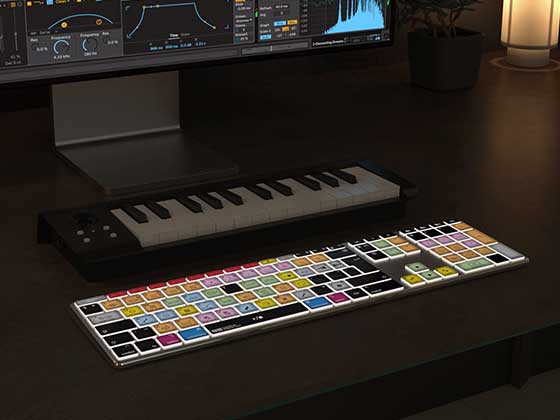
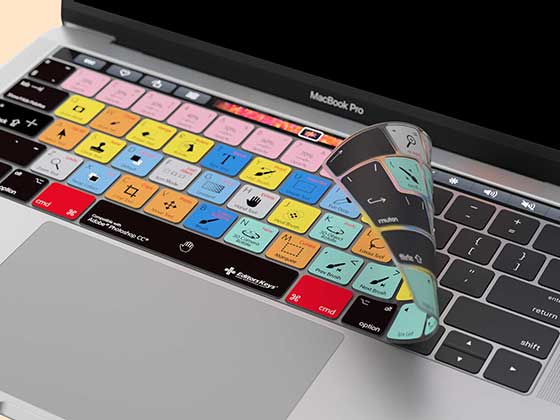
That's where Editors Keys shortcut editing keyboards and keyboard covers for Reason Studios can make a huge difference.
Each keyboard features the most commonly used Reason shortcuts printed directly onto the keys, allowing you to:
-
Learn shortcuts naturally as you work
-
Navigate projects more quickly
-
Edit MIDI and audio faster
-
Reduce reliance on menus
-
Improve productivity during long production sessions
For beginners, having the shortcuts visible provides an excellent way to memorise essential commands without constantly referring to documentation. Experienced producers benefit from faster editing and smoother workflows, helping ideas stay creative rather than getting lost in technical distractions.
Whether you're programming drums, arranging songs or mixing a finished track, Editors Keys keyboards and keyboard covers help you spend less time searching and more time creating.
Final Thoughts
Building your own drum machine in Reason Studios is one of the best ways to understand rhythm, sound design and music production.
Starting with simple kick, snare and hi-hat patterns allows complete beginners to create professional beats surprisingly quickly. As your confidence grows, layering sounds, adding effects and introducing variation will help your productions stand out from stock presets.
The beauty of Reason lies in its flexibility. There are no strict rules—only opportunities to experiment. Every adjustment you make teaches you something new, and before long you'll be creating custom drum machines tailored perfectly to your own musical style.