
If you've recently updated Logic Pro and spotted a feature called Chord ID, you might be wondering exactly what it does and whether it's worth incorporating into your workflow.
The answer is a resounding yes.
Chord ID is one of the most exciting additions to recent versions of Logic Pro, using intelligent audio analysis to identify the harmonic content of your recordings and automatically generate chord information. Whether you're a songwriter, producer, mixer or simply trying to work out what you played six months ago, Chord ID can save time and open up entirely new creative possibilities.
In this guide, we'll explain what Chord ID is, how it works, how to use it step-by-step and why it could become one of your favourite features inside Logic Pro.

What Is Chord ID?
Chord ID is Logic Pro's built-in chord recognition system that analyses both audio recordings and MIDI performances to determine the chords being played.
Once analysed, Logic automatically creates a chord progression and places the detected harmony into the Chord Track, allowing other features within the DAW to understand the song's harmonic structure.
Instead of manually figuring out every chord by ear or entering them yourself, Chord ID performs the analysis automatically, making it much easier to organise projects and build arrangements.
Apple describes it as an instant chord detection tool capable of pulling chords from both MIDI and audio regions directly into the Chord Track, where they can then be used by Session Players and other workflow features.

How Does Chord ID Work?
At its core, Chord ID analyses the frequencies and harmonic relationships contained within an audio recording or MIDI performance.
For MIDI, the process is relatively straightforward because Logic already knows exactly which notes are being played.
For audio recordings, however, the software has to identify pitches, determine which notes belong together and infer the most likely chord being performed. Modern machine learning and AI-assisted analysis help Logic interpret these complex harmonic relationships much more effectively than traditional detection methods.
The software examines:
-
Simultaneous notes sounding together
-
Harmonic overtones
-
Timing and note groupings
-
Musical context within the progression
-
Relationships between neighbouring chords
Rather than simply looking for isolated notes, Chord ID attempts to understand the broader musical picture, producing results that are often remarkably accurate even from live recordings or guitar performances.
Why Is Chord ID So Useful?
Faster songwriting
Perhaps you recorded an acoustic guitar idea months ago but never wrote down the chords.
With one analysis, Logic can identify the progression and display it in the Chord Track, making it easy to continue developing the song without having to work everything out again.
Better collaboration
When collaborating with other musicians, everyone can instantly see the harmonic structure of a project.
Instead of saying "the strange chord before the chorus", collaborators can see exactly what's happening.
Works with Session Players
One of the biggest advantages is that Logic's AI-powered Session Players can now follow chords extracted from existing recordings.
You can record a piano progression, analyse it with Chord ID and immediately have AI bass, keyboards or other accompaniment perform along with the detected harmony.
Learning songs
Students and musicians can analyse recordings to better understand chord progressions and harmonic movement.
Rather than relying purely on tabs or online chord charts, they can inspect actual performances directly inside Logic.
Organising old projects
Many producers have hundreds of unfinished sessions with unnamed progressions.
Chord ID makes revisiting archived projects significantly easier by automatically documenting the harmony.
Can Chord ID Analyse Audio as Well as MIDI?
Yes.
This is one of its biggest strengths.
Unlike many older chord recognition systems that only worked with MIDI data, Logic Pro can analyse:
-
Recorded guitars
-
Piano performances
-
Synth recordings
-
Vocal harmonies
-
Imported audio files
-
Sample loops
-
MIDI regions
The resulting chord information can then be applied to the Chord Track for further editing or creative use.
Step-by-Step: How to Use Chord ID in Logic Pro
If you've never used Chord ID before, the process is surprisingly simple.
Step 1: Open your project
Launch Logic Pro and load the project containing the audio or MIDI region you wish to analyse.
Step 2: Enable the Chord Track
Open the Global Tracks area if it isn't already visible.
Ensure the Chord Track is displayed.
This is where Logic will place the detected chord progression.
Step 3: Select your audio or MIDI region
Choose the section you want Logic to analyse.
This could be:
-
A guitar recording
-
Piano performance
-
MIDI keyboard part
-
Imported backing track
-
Synth progression
Step 4: Analyse the chords
There are multiple ways to trigger Chord ID.
One of the easiest methods is to drag the selected region directly onto the Chord Track.
Alternatively, you can use Logic's chord analysis commands from the region menu to analyse the selected material.
Logic then processes the region and generates chord information automatically.
Step 5: Review the detected chords
Once complete, the Chord Track displays each identified chord across the timeline.
You can scroll through the project and see how the progression changes throughout the song.
Step 6: Edit if necessary
Although Chord ID is highly capable, no automatic detection system is perfect.
Complex jazz voicings, unusual inversions or ambiguous harmonies may occasionally require manual correction.
Fortunately, the generated chords remain editable.
Step 7: Use the chords creatively
Once populated, the Chord Track becomes useful throughout your project.
You can:
-
Guide Session Players
-
Understand harmonic movement
-
Arrange additional instruments
-
Create new accompaniment
-
Organise song structures
-
Analyse existing recordings

Does Chord ID Always Get It Right?
Not always. While the AI-powered analysis is impressive, several factors can affect accuracy:
Complex chord extensions
Highly sophisticated jazz chords or altered harmonies can sometimes be simplified.
Heavy distortion
Extremely distorted guitars or dense mixes may make individual notes harder to separate.
Inversions
Some inversions may be interpreted differently depending on musical context.
Noisy recordings
Background noise or overlapping instruments can reduce detection accuracy.
Even so, the generated results usually provide an excellent starting point and often require only minor adjustments.
Chord ID vs Traditional Chord Detection
Historically, producers would identify chords by:
-
Playing them by ear
-
Using third-party plugins
-
Looking up sheet music
-
Entering chords manually
Chord ID automates much of this process.
Instead of spending several minutes analysing each section, Logic can often generate an accurate progression within seconds, allowing producers to stay focused on creativity rather than administration.
Who Should Use Chord ID?
Almost anyone using Logic Pro can benefit.
Songwriters
Quickly recover forgotten progressions and experiment with arrangements.
Producers
Generate harmonic information for AI Session Players and production workflows.
Students
Learn chord structures directly from recordings.
Mix engineers
Understand project harmony without needing separate notation.
Composers
Analyse sketches and organise orchestral arrangements more efficiently.
Tips for Getting Better Results
To maximise Chord ID accuracy:
-
Use recordings with a clearly audible harmonic instrument.
-
Analyse isolated sections where possible.
-
Remove excessive background noise before processing.
-
Double-check unusual chord names.
-
Correct any complex voicings manually if required.
The cleaner the source material, the more accurate the AI analysis tends to be.
Frequently Asked Questions
Does Chord ID work with imported songs?
Yes. Imported audio files can be analysed, allowing Logic to identify the chords present within the recording.
Does it work with MIDI?
Absolutely. MIDI generally produces extremely accurate chord recognition because the software already knows exactly which notes are present.
Can I edit detected chords?
Yes. The generated chord information can be modified manually whenever needed.
Does Chord ID replace music theory?
Not at all. It's a productivity tool that accelerates analysis, but understanding harmony still helps when interpreting or correcting results.
Speed Up Logic Pro Even Further with Editors Keys
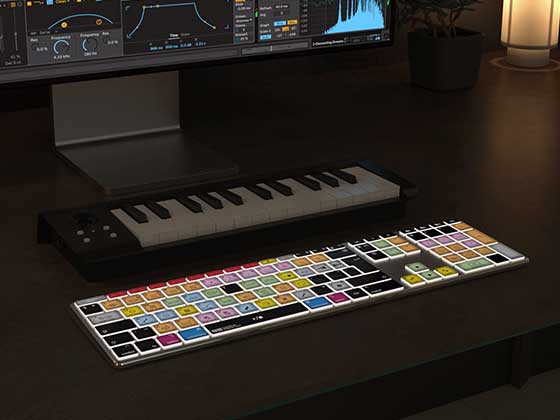
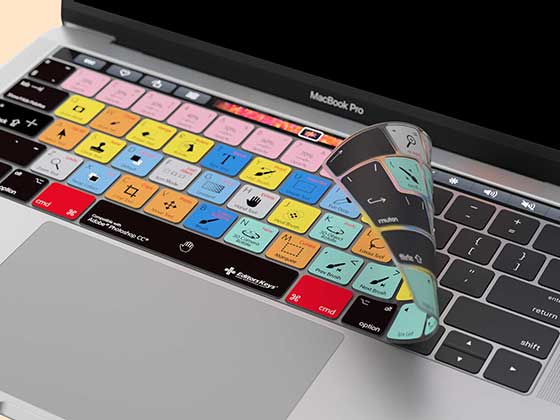
As powerful as Logic Pro's new AI features are, efficiency still comes down to how quickly you can navigate the software. That's where Editors Keys shortcut editing keyboards and keyboard covers make a real difference.
Rather than memorising dozens of keyboard shortcuts, every important Logic Pro command is clearly printed directly onto the keys. Colour-coded layouts make commonly used editing functions instantly accessible, helping beginners learn the software faster while allowing experienced producers to work more efficiently.

Whether you're comping vocals, editing MIDI, using Chord ID, arranging projects or mixing tracks, having the shortcuts visible can significantly reduce reliance on menus and speed up your workflow. Editors Keys offers both dedicated Logic Pro editing keyboards and silicone keyboard covers designed specifically for Apple keyboards and MacBooks, making them an excellent upgrade for anyone spending serious time inside Logic Pro.
Final Thoughts
Chord ID represents another major step forward in Logic Pro's evolution towards intelligent music production.
By automatically analysing audio and MIDI to detect chord progressions, it removes one of the most time-consuming aspects of arranging and analysing music. Combined with the Chord Track and AI-powered Session Players, it enables producers to transform simple recordings into fully realised arrangements with remarkable speed.
Whether you're resurrecting an old demo, learning a favourite song or building an entirely new production, Chord ID offers a smarter, faster way to understand the harmonic foundations of your music. Once you've incorporated it into your workflow, it's likely to become one of those features you wonder how you ever managed without.