
If you've ever sat waiting for Logic Pro to load a project, experienced stuttering playback, watched the spinning beachball appear, or found your Mac struggling with even relatively small sessions, you're certainly not alone.
One of the most common questions asked by music producers is: "Why is Logic Pro so slow?"
The good news is that Logic Pro 12.3 is incredibly well optimised for macOS, especially on Apple Silicon Macs. In most cases, sluggish performance isn't caused by Logic Pro itself, but by the way a project is configured, the plugins being used, or limitations in your computer's hardware.
Whether you're producing electronic music, recording bands, editing podcasts or mixing film soundtracks, this guide explains the most common reasons Logic Pro becomes slow, why they happen, and exactly how to fix them.

Why Does Logic Pro Become Slow?
Logic Pro performs thousands of calculations every second.
Every plugin, virtual instrument, automation lane, software synth, audio track and effect consumes processing power.
As your project grows, so does the workload placed on your Mac.
Eventually one component reaches its limit.
Usually this is one of the following:
-
CPU
-
RAM (Memory)
-
Storage speed
-
Audio buffer settings
-
Third-party plugins
-
Disk streaming
-
Sample libraries
Understanding which one is causing the bottleneck is the first step towards fixing it.

Check Your Mac's CPU Usage
Your processor (CPU) is effectively the brain of your computer.
Every time Logic plays a software instrument, runs a compressor, calculates reverb tails or processes EQ, your CPU performs those calculations in real time.
If too many calculations happen simultaneously, playback begins to struggle.
Common symptoms include:
-
Audio crackles
-
Pops
-
Playback stopping unexpectedly
-
"System Overload" errors
-
Frozen interface
-
Slow editing
-
Delayed response when pressing Play
Fortunately, Logic includes a Performance Meter.
Open:
View → Show Performance Meter
You'll see separate CPU meters showing how hard your processor is working.
If these regularly peak into the red, your CPU is becoming overloaded.
Not knowing your shortcuts
Free: the complete Logic Pro shortcuts PDF
Logic Pro's default key commands, including the 28 single-key commands most users never find. A4, printable, grouped by task. Pop your email in and we'll send it straight over.
We'll email the PDF straight over, then the occasional tip. Unsubscribe any time.
Too Many Software Instruments
Virtual instruments are among the biggest causes of slow projects.
Some synths use very little processing power.
Others—particularly orchestral libraries, physical modelling instruments and advanced analogue emulations—can use enormous amounts of CPU.
For example, several instances of:
-
Kontakt
-
Omnisphere
-
Serum
-
Keyscape
-
Massive X
running together can quickly overwhelm even modern Macs.
Solution
Once you're happy with an instrument part, consider:
-
Bouncing the track to audio
-
Freezing the track
-
Disabling unused instrument tracks
Logic won't need to recalculate those sounds every time you press Play.
Freeze Tracks You Aren't Editing
Many beginners overlook Logic's Track Freeze feature.
Freezing temporarily renders all plugins and instruments on a track into audio.
Instead of recalculating dozens of plugins in real time, Logic simply plays back the rendered audio.
This dramatically reduces CPU usage.
It's especially useful for:
-
Large orchestral sessions
-
Electronic music
-
Film scoring
-
Projects with many software synths
Whenever you need to edit the track again, simply unfreeze it.
Increase the Buffer Size
One of the biggest causes of poor performance is using an audio buffer that's too small.
But what exactly is the buffer?
Think of it like a small workspace for your computer.
Instead of processing every tiny piece of audio instantly, Logic groups audio into chunks called buffers.
Larger chunks are easier for your CPU to process.
Smaller chunks require much faster calculations.
Small Buffer (32–64 samples)
Ideal for:
-
Recording vocals
-
Recording guitars
-
Playing MIDI keyboards live
Advantages:
-
Very low latency
Disadvantages:
-
Higher CPU usage

Large Buffer (256–1024 samples)
Ideal for:
-
Mixing
-
Editing
-
Mastering
Advantages:
-
Lower CPU usage
-
More stable playback
Disadvantages:
-
Increased latency
To change this setting:
Logic Pro → Settings → Audio → I/O Buffer Size
Many producers record using a small buffer, then increase it once recording has finished.

What Is Latency?
Latency simply means delay.
If you press a piano key and hear the sound slightly afterwards, that's latency.
High latency usually appears when:
-
Buffer sizes are too large
-
Audio interfaces use outdated drivers
-
Plugins introduce processing delay
During mixing, latency usually isn't a problem.
During recording, however, it can make performances difficult.
Logic includes Low Latency Mode, which temporarily bypasses plugins that introduce significant delay.
This is especially useful when recording vocals or instruments into an already busy project.
Running Out of RAM (Memory)
RAM is your computer's short-term memory.
It stores the information Logic needs immediately.
Large sample libraries can consume enormous amounts of RAM.
For example:
-
Drum libraries
-
Orchestral strings
-
Choirs
-
Piano instruments
-
Cinematic sample collections
When RAM becomes full, macOS begins using your SSD as temporary memory.
This is called memory swapping.
Although modern SSDs are fast, they are still much slower than RAM.
This often causes:
-
Slow loading
-
Interface lag
-
Beachballs
-
Playback stuttering
If your projects frequently exceed available memory, upgrading to a Mac with more unified memory can make a dramatic difference.
Your SSD May Be Nearly Full
Storage space affects performance more than many people realise.
macOS uses free SSD space for:
-
Temporary files
-
Memory swapping
-
System caching
When your drive is almost full, everything slows down.
Try to keep at least 15–20% of your SSD free.
If your sample libraries occupy hundreds of gigabytes, moving them to a fast external SSD can significantly improve workflow.
Slow External Drives
Not every external drive is suitable for music production.
Older USB hard drives can struggle to stream large sample libraries.
Modern NVMe SSDs connected via Thunderbolt or USB 4 are considerably faster.
If Kontakt or orchestral libraries constantly load slowly, the drive may be the real culprit.
Too Many Plugins
It's easy to keep adding:
-
EQs
-
Compressors
-
Saturation
-
Tape emulation
-
Limiters
-
Reverbs
-
Delays

Eventually every channel strip contains ten or more plugins.
Each one requires CPU resources.
Instead of placing identical reverbs on twenty tracks, consider using auxiliary buses.
One reverb can process multiple tracks simultaneously, greatly reducing CPU usage.
Third-Party Plugins Can Cause Problems
Not all plugins are equally well optimised.
Some older Intel-only plugins still rely on Rosetta translation on Apple Silicon Macs.
Others may contain bugs or memory leaks that gradually slow down your session.
If Logic suddenly becomes unstable after installing a new plugin, try temporarily removing or disabling it to see if performance improves.
Keeping plugins updated can resolve many compatibility and optimisation issues.
Sample Rate vs Bit Depth
Many new producers confuse these two settings.
Although they're related, they affect different aspects of audio.
Sample Rate
Sample rate determines how many times audio is measured every second.
Common sample rates include:
-
44.1 kHz
-
48 kHz
-
96 kHz
-
192 kHz
Higher sample rates produce more audio data.
This increases CPU usage and storage requirements.
Unless your project specifically requires it, 44.1 kHz or 48 kHz is sufficient for most music production.
Running every project at 192 kHz may dramatically increase processor load with little practical benefit for many users.
Bit Depth
Bit depth determines the amount of detail available for recording audio.
Common settings include:
-
16-bit
-
24-bit
-
32-bit float (during internal processing)
Higher bit depths improve dynamic range and reduce the likelihood of clipping during recording.
Unlike sample rate, bit depth generally has a much smaller impact on overall CPU performance.
For most music production, recording at 24-bit offers an excellent balance between quality and practicality.
Close Other Applications
Your Mac has limited system resources.
If you're simultaneously running:
-
Chrome with dozens of tabs
-
Photoshop
-
Premiere Pro
-
DaVinci Resolve
-
Video rendering software
-
Dropbox syncing
Logic has fewer resources available.
Closing unnecessary applications before recording or mixing often produces an immediate improvement.

Update Logic Pro and macOS
Performance improvements arrive with almost every Logic update.
Logic Pro 12.3 continues Apple's focus on optimising performance for Apple Silicon processors, improving efficiency and compatibility with modern Macs.
Similarly, macOS updates often include graphics, memory management and audio performance improvements.
Before updating, however, it's wise to check that your essential third-party plugins are compatible with the latest versions.
Reduce Visual Clutter
Very large projects containing hundreds of tracks, folders, automation lanes and high-resolution waveforms can feel slower simply because the interface has more information to display.
Cleaning your session by:
-
Removing unused tracks
-
Deleting inactive plugins
-
Archiving old takes
-
Organising track stacks
can make navigation much quicker.
Use Smart Project Management
Professional producers rarely keep everything active.
Instead they:
-
Bounce MIDI instruments to audio
-
Archive unused takes
-
Disable inactive plugins
-
Freeze finished tracks
-
Organise buses efficiently
Smaller, cleaner projects remain responsive for much longer.
Improve Your Workflow with Editors Keys Logic Pro Keyboards
One of the easiest ways to make Logic Pro feel faster is to reduce the amount of time spent searching through menus or trying to remember keyboard shortcuts.
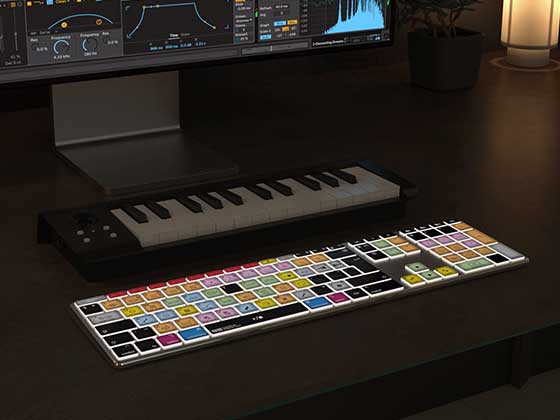
Editors Keys offers dedicated Logic Pro shortcut keyboards and Logic Pro keyboard covers, with the most commonly used shortcuts clearly printed on every key. Instead of memorising dozens of commands, you can see them instantly while you work, helping you edit, record and mix more efficiently.
Whether you're trimming regions, splitting clips, opening the Mixer, enabling Flex Time, quantising MIDI or switching between editing tools, the shortcuts are right in front of you. This can significantly reduce interruptions to your creative flow, particularly for beginners learning Logic Pro or experienced producers looking to work faster.

Logic Pro Shortcut Keyboards
Editors Keys wireless and wired Logic Pro keyboards are designed specifically for music producers and audio engineers. They're ideal if you spend hours in Logic every day and want quicker access to the software's most important commands without constantly reaching for menus.
Logic Pro Keyboard Covers
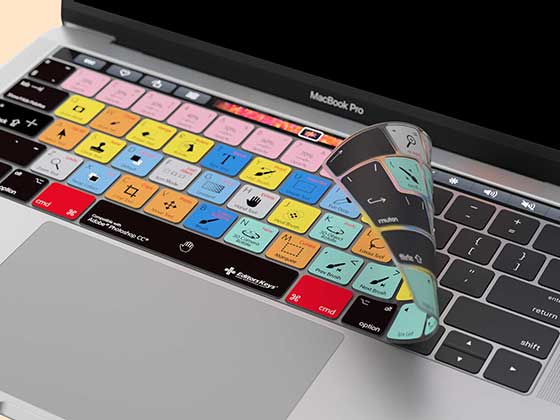
If you already own an Apple Magic Keyboard or MacBook, a Logic Pro keyboard cover provides an affordable way to gain the same shortcut reference. The silicone cover fits over your existing keyboard, protects it from dust and spills, and gives you an instant visual guide to Logic Pro's most useful shortcuts.
For many producers, this means spending less time looking up commands online and more time creating music.
Frequently Asked Questions
Why is Logic Pro slow on a new Mac?
Even powerful Macs can slow down if projects contain dozens of software instruments, CPU-intensive plugins, extremely high sample rates or insufficient free storage space. Performance depends just as much on project complexity as computer specifications.
Why does Logic Pro keep showing System Overload?
This usually means your CPU cannot process all audio in time. Increasing the buffer size, freezing tracks, bouncing instruments and reducing plugin usage often resolves the issue.
Does more RAM make Logic Pro faster?
More RAM allows larger sample libraries and more instruments to remain loaded without forcing macOS to swap memory to disk. While it won't increase CPU speed, it can greatly improve performance in large projects.
Does sample rate affect performance?
Yes. Higher sample rates require more processing power and storage because Logic must process more audio data every second. For most music production, 44.1 kHz or 48 kHz provides excellent quality with better overall performance than higher sample rates.
Can plugins slow down Logic Pro?
Absolutely. Poorly optimised or outdated third-party plugins are among the most common causes of sluggish performance, crashes and excessive CPU usage.

Final Thoughts
If Logic Pro feels slow, don't assume you need a new computer straight away. In many cases, the issue comes down to project settings, heavy plugin usage, memory limitations or inefficient workflows rather than the software itself.
Simple changes such as increasing the buffer size while mixing, freezing completed tracks, keeping your SSD from filling up, using sensible sample rates, and closing unnecessary background applications can make a noticeable difference. Regularly updating your plugins and keeping projects organised will also help maintain smooth performance as sessions become more complex.
Finally, remember that optimising your workflow is just as important as optimising your Mac. Using an Editors Keys Logic Pro shortcut keyboard or keyboard cover can help you access commands more quickly, learn essential shortcuts naturally and spend less time navigating menus—allowing you to focus on what matters most: making music.